


Table of Contents
Granite vs. marble countertops — it’s one of the most common decisions Denver homeowners face when remodeling a kitchen, and it’s easy to see why the choice is hard. Both are pulled from the earth, polished to a high shine, and considered premium countertop materials. But in a working kitchen, they behave very differently — and choosing the wrong one can lead to years of frustration with a surface that looked beautiful in the showroom but doesn’t hold up to how you actually cook and live.
This isn’t a question with one right answer. It depends on how you use your kitchen, what aesthetic appeal you’re after, and how much daily maintenance you’re willing to commit to. What follows is an honest breakdown of both popular countertop materials — the kind of perspective you’d get from someone who handles these slabs every day, not a generic pros-and-cons list.
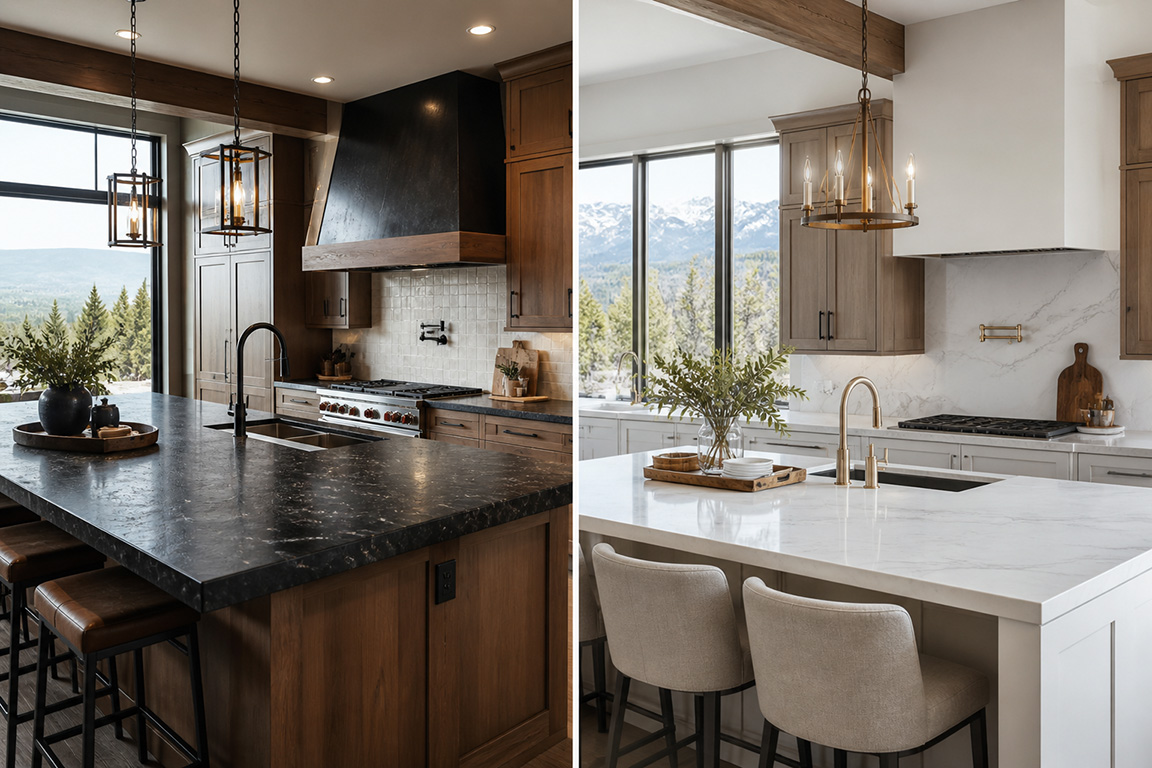
The Core Difference: How Granite and Marble Are Formed
Understanding why granite and marble perform differently starts with how each is formed. Granite is an igneous rock — it formed when magma cooled slowly deep beneath the Earth’s surface. That slow cooling produced a dense, interlocked crystal structure that makes granite exceptionally hard and resistant to daily wear. Marble, by contrast, is a metamorphic rock: it began as limestone and was transformed by intense heat and pressure over millions of years, which recrystallized its structure into the softer, more porous material you see in showrooms. That recrystallization also creates marble’s distinctive veining — mineral deposits that became part of the stone during its transformation.
The practical implication is straightforward: granite’s igneous origins give it a natural advantage in hardness and density, while marble’s metamorphic composition makes it more reactive to the acidic and abrasive conditions of an active kitchen. According to the Natural Stone Institute, understanding how a stone forms is one of the most reliable predictors of its performance in a specific application.
How Granite and Marble Countertops Perform in a Real Kitchen
Durability, Scratch Resistance, and the Mohs Scale
Granite ranks around 6–7 on the Mohs scale, which means it’s harder than most kitchen tools that come into contact with your counters. It’s genuinely scratch-resistant — you can slide pots and pans across it, chop aggressively nearby, and subject it to the general chaos of a busy family kitchen without much concern. Granite takes the punishment of everyday use and shows very little for it.
Marble registers at around 3–4 on the same scale, significantly softer. In practical terms, this means marble can show minor scratches over time. Metal utensils, abrasive cleaners, and even certain ceramics can leave marks on a polished finish. In Denver homes where the kitchen functions as a gathering hub — open-concept layouts, frequent entertaining, kids at the island — marble accumulates wear faster than granite does.
Stain and Acid Resistance
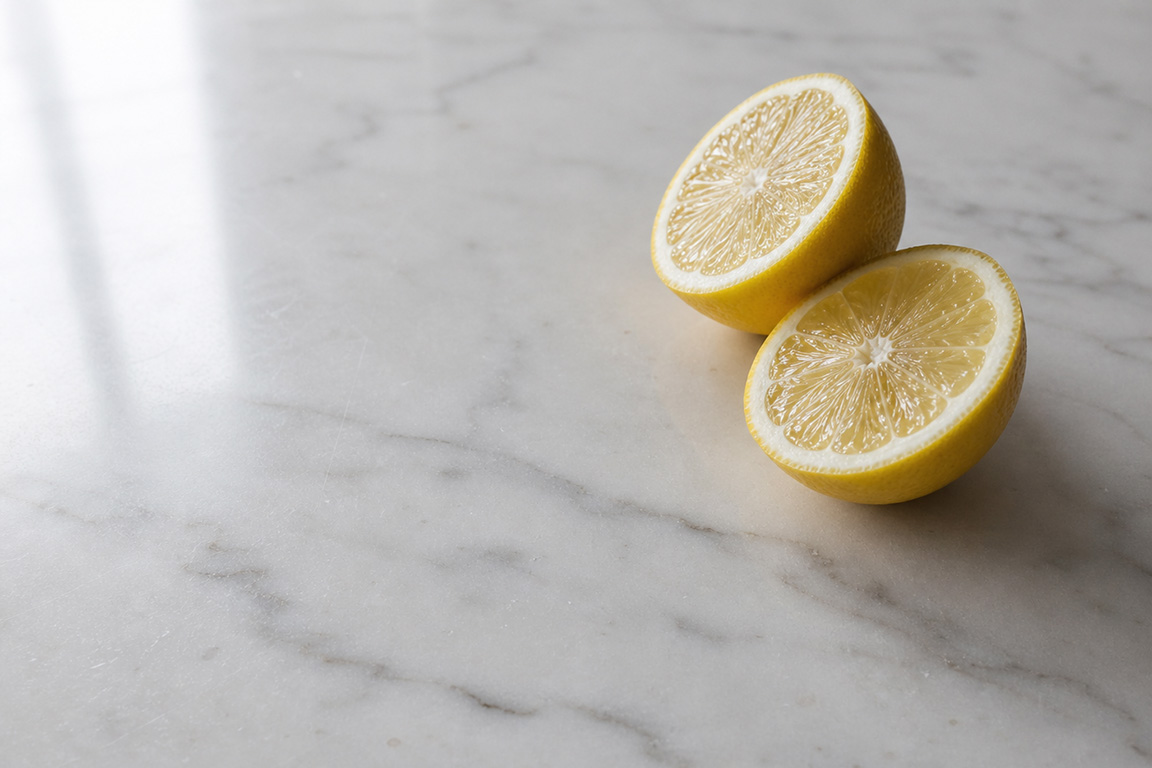
This is where the gap between the two natural stone countertops is most pronounced in a kitchen. Marble contains calcite, which reacts chemically with acids. Lemon juice, red wine, vinegar, tomato sauce, coffee — all common kitchen staples — can etch marble’s surface on contact. Etching is different from staining: it’s not a discoloration sitting on top of the stone but a chemical change in the stone itself that creates a dull finish in the polish. You can wipe up a spill immediately and still see the damage.
Granite doesn’t have this vulnerability. It won’t etch from acidic foods, and while it can absorb liquids if left unsealed, a properly sealed granite surface resists stains well. The Marble Institute of America notes that etching is one of the most common and misunderstood forms of stone damage in kitchen environments — and the one most difficult to reverse without professional restoration.
It’s also worth noting that Denver’s dry climate actually works in granite’s favor. Lower ambient humidity minimizes moisture-related issues that can affect more porous stone countertops, and granite’s density means it holds up especially well in Colorado’s arid conditions. Marble is more porous than granite and requires more frequent sealing to protect it from stains and etching, which is particularly important to keep in mind here, where low humidity can cause sealers to dry out and degrade faster than homeowners expect.
Heat Resistant Performance
Both granite and marble are heat-resistant materials that can handle moderate exposure without immediate damage — a warm pan set briefly on either surface won’t cause problems under normal circumstances. Neither material is fully immune to thermal shock from prolonged direct heat exposure, and using trivets remains a best practice for any stone countertop. Granite’s denser composition gives it a slight edge in heat tolerance for a busy kitchen, but for most home cooking scenarios, both perform comparably. One practical advantage of natural stone: it stays cool to the touch at room temperature, which makes both materials popular with bakers who want a cool work surface for pastry.
The Aesthetic Appeal — And Why It Matters for Denver Homes
If granite has the performance edge, marble offers elegance that’s genuinely difficult to match. Marble’s timeless elegance has defined luxury interiors for centuries — the sweeping, branching veining in Calacatta and Carrara varieties creates a luxurious look that no engineered material has fully replicated. The palette tends toward whites, soft grays, and warm creams, which pair naturally with the bright, airy kitchen aesthetics popular across Denver’s newer construction and mountain-modern remodels.
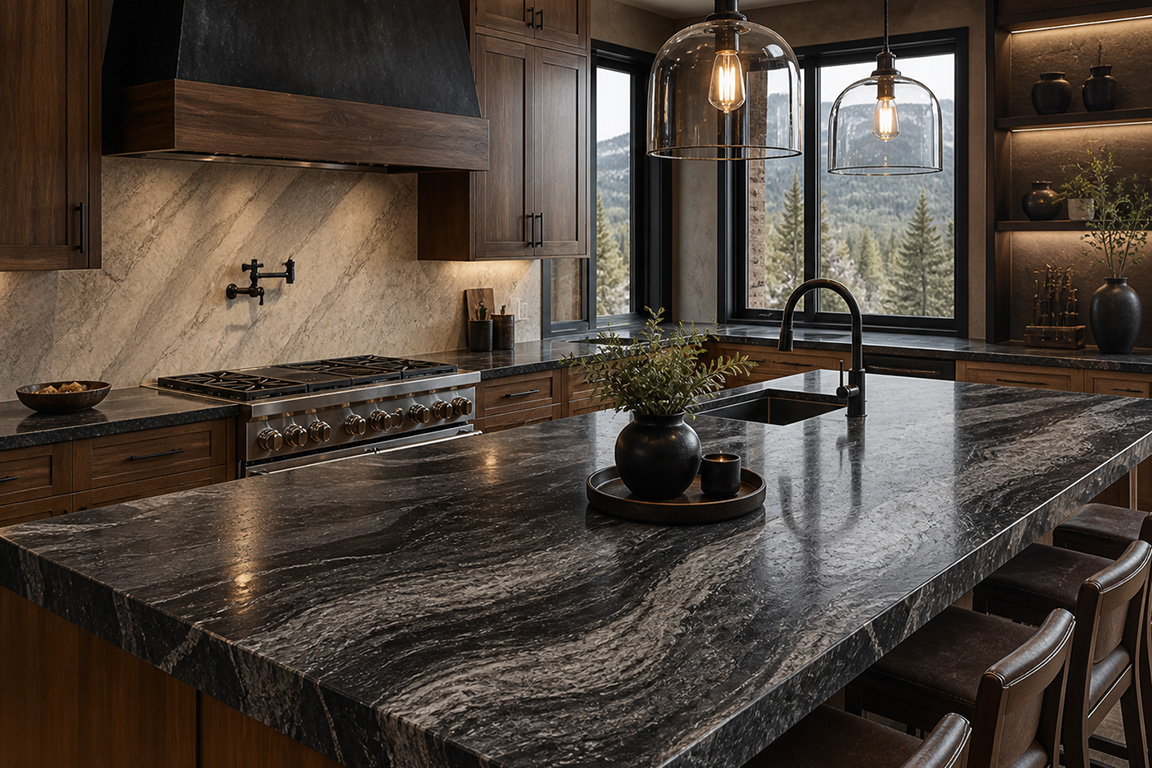
Granite brings its own kind of visual drama, but it reads differently. The movement in granite tends to be denser — speckled, crystalline, or flowing in ways that vary dramatically from one-of-a-kind slab to slab. Earth tones, deep blacks, blues, and burgundies appear in granite in ways that simply don’t appear in marble. If you’re designing a transitional kitchen with warm wood tones and industrial hardware, granite often integrates more naturally than marble’s cooler, more formal character.
Both materials are completely unique on a slab-by-slab basis. Edge detail, movement, coloration — none of it is exactly reproducible. That’s why seeing the actual slabs in person matters far more than looking at samples. At Granite Direct’s Denver showroom, you’re choosing your specific granite countertop or marble countertop from the actual inventory on the floor, not a two-inch chip that tells you almost nothing about how a full slab will read in your space.
Cost Comparison — What Denver Homeowners Actually Pay Per Square Foot
Granite countertops typically range from $60 to $90 per square foot installed, while marble can cost between $100 to over $200 per square foot installed, making granite the more budget-friendly option for most kitchen projects. That said, both materials span a wide price range depending on origin, rarity, and movement — exotic granites with dramatic patterning can approach mid-range marble pricing, but for homeowners on a tighter budget, granite gives you more material choice at a given spend.
Marble carries what you might fairly call a luxury tax. The complexity of quarrying consistent marble slabs — especially the most sought-after Calacatta varieties — drives prices well above those of comparable granite options. If the marble look is central to your design vision but the cost is a concern, quartzite and certain quartz countertops can deliver similar aesthetics at different price points.
Where Denver homeowners have a genuine advantage is buying wholesale. Granite Direct imports slabs directly from quarries in Brazil and India and sells them at transparent, clearly posted prices — no retail markup, no contractor middleman. You can browse the live slab inventory and see what you’re paying upfront, which is unusual in this industry. That price, depending on the actual slab — not a category estimate — is exactly what you need to make a confident decision.
Maintenance Realities — What You’re Signing Up For
Neither stone countertop is completely maintenance-free, but the level of commitment is quite different.
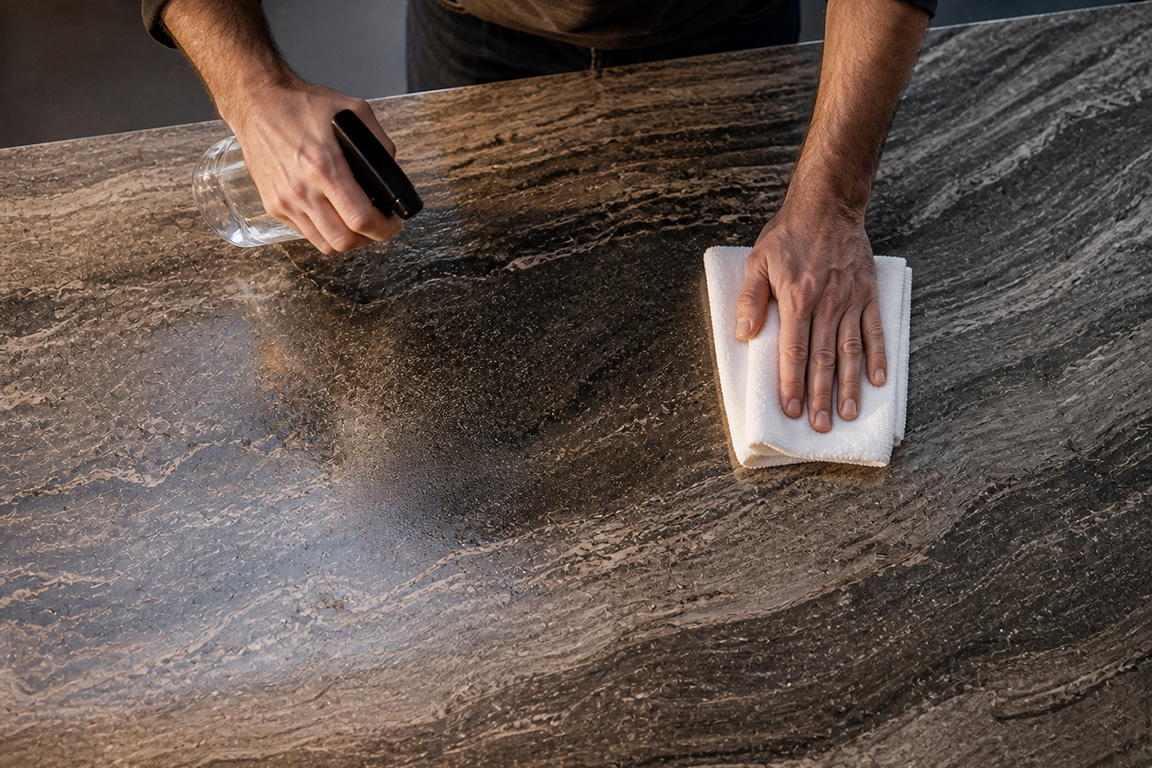
A properly sealed granite surface needs to be resealed roughly once a year under typical use — some premium sealers extend that interval further. Day-to-day, a wipe with warm water and a pH-neutral cleaner is all it takes. Avoid abrasive cleaners, which can dull the polished finish over time, but otherwise, granite is a genuinely low-maintenance surface that accommodates real life without demanding much in return.
Marble requires more. Sealing helps resist staining but does nothing to prevent etching, which happens the moment an acid contacts the surface, regardless of sealer coverage. Marble needs sealing every few months to keep its protection current, and day-to-day care requires consistent habits: immediate cleanup of acidic spills, use of a pH-neutral cleaner only, and periodic professional honing or polishing to address surface wear. The American Institute of Conservation notes that stone maintenance is highly dependent on use context — the same material that thrives in a low-traffic application can deteriorate quickly in a busy kitchen.
Marble in a kitchen isn’t a mistake — it’s a conscious choice. Many homeowners love the lived-in patina that develops over years of proper care, viewing the character that accumulates as part of the material’s appeal rather than a flaw. But that requires genuinely accepting the material on its own terms, not expecting it to behave like granite.
Which Countertop Material Is Right for Your Denver Kitchen?
Here’s the honest framework for making this decision.
Granite’s resilience makes it the better choice for most busy family kitchens in the Denver area. If you cook frequently, have kids, entertain regularly, or simply want a durable surface that handles whatever you throw at it without requiring daily vigilance, granite countertops are almost certainly the right call. They perform well, they’re beautiful, and they fit the active lifestyle of most Denver households without asking much in return.
If you’re designing a lower-traffic kitchen where aesthetics are the primary driver — or if you have a dedicated baking station where marble’s cool surface temperature is an actual functional benefit — marble can absolutely work. Marble offers elegance that granite doesn’t replicate, and in the right application, that’s worth the tradeoff. It’s best suited for baking stations or lower-traffic areas rather than primary work zones in a busy kitchen, and it rewards homeowners who approach it as a design-forward material with specific care requirements.
There’s also a third path worth considering. If you’re drawn to marble’s look but want granite’s performance, quartzite splits the difference more effectively than any other natural stone. It’s harder than both marble and most granites, acid-resistant, and produces some of the most dramatic white-and-gray distinctive veining in the stone world — close enough to Calacatta marble that many homeowners can’t tell the difference until you explain the geology. You can explore the full comparison on the quartzite countertops page, or bring the question to a design consulting appointment where someone can walk you through the tradeoffs with actual slabs in front of you.
It’s also worth knowing that both granite and marble translate beautifully beyond the kitchen — bathroom vanities are among the most popular secondary applications for both materials, where a marble slab can deliver that luxurious look in a lower-traffic environment, where etching and scratching are far less of a concern.
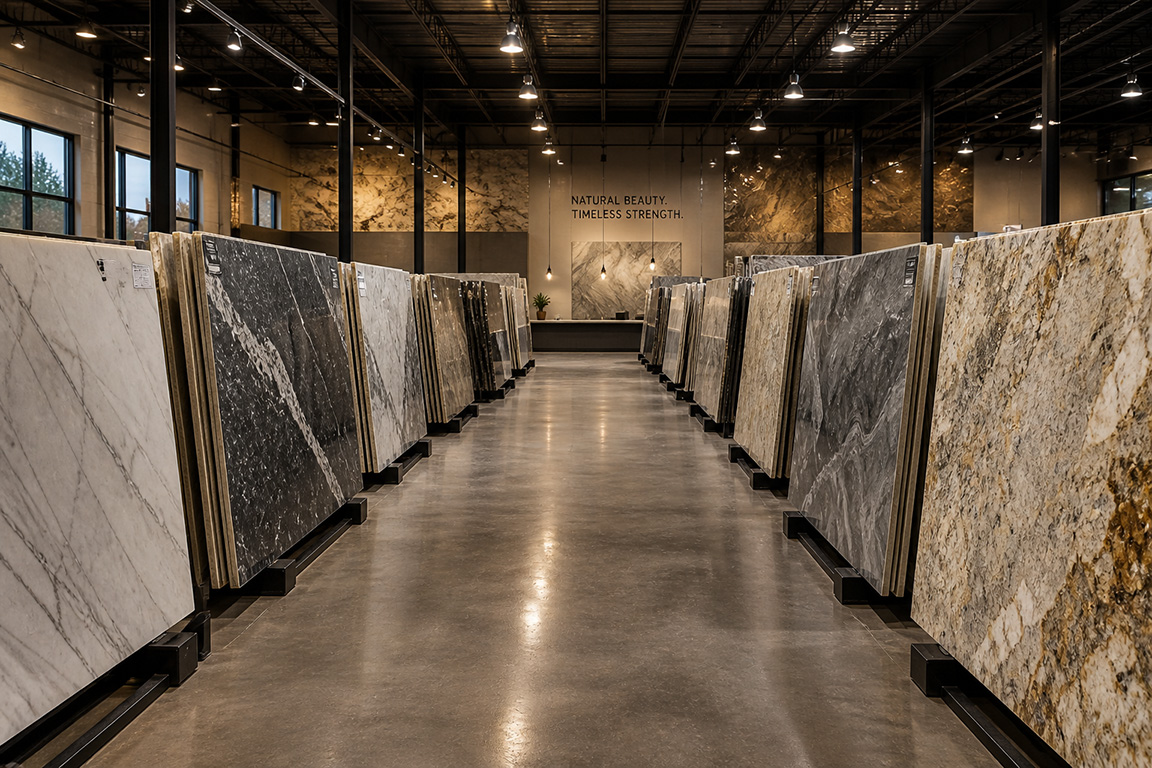
See Both Stones Side by Side at Granite Direct’s Denver Showroom
The best way to make this decision isn’t reading about it — it’s standing in front of both materials and seeing how they actually look in person. Granite Direct’s 10,000-square-foot Denver warehouse carries over 275 exceptional choices of granite, marble, quartzite, and quartz countertops, all with clearly posted pricing and no pressure to decide on the spot.
From material selection through professional installation, most projects wrap up within 2–3 weeks. Everything — design, fabrication, and installation — is handled in-house, which keeps the process straightforward and the timeline predictable. There’s even a final walkthrough to make sure the finished installation matches your design vision before the crew leaves.
Call (303) 282-8317 to talk through your project, or come in and see what’s on the floor. Comparing granite and marble side by side for ten minutes is worth more than any article. Contact us today!
Frequently Asked Questions -Granite vs. Marble Countertops
Is marble a good choice for kitchen countertops?
Marble can work in a kitchen, but it requires realistic expectations. Because marble contains calcite, it etches when it comes into contact with acidic substances like lemon juice, wine, or vinegar — leaving a dull finish on the polish that can’t be cleaned away. It also shows minor scratches more readily than granite. Marble performs best in lower-traffic kitchens or dedicated baking stations, where the homeowner is willing to maintain careful habits and accepts that the surface will develop some patina over proper care over time.
Does granite stain easily?
Granite is naturally resistant to staining, especially when properly sealed. Its density and lower porosity mean liquids don’t penetrate quickly, and a quality sealer adds another layer of protection. A well-sealed granite countertop wiped down promptly after spills will resist staining from the most common kitchen substances. Annual re-sealing is the standard maintenance recommendation for most granite surfaces in Denver homes.
How often do you need to seal granite vs. marble?
Granite typically needs sealing once a year, though some premium penetrating sealers can extend that to every two to three years, depending on use and the specific stone. Marble needs sealing every few months because of its higher porosity. Critically, sealing marble protects against staining but does not prevent etching, which is a chemical reaction that no sealer can stop.
What’s the difference between etching and staining on marble?
Staining occurs when a substance penetrates the stone’s pores and leaves a discoloration within the material. Etching is a chemical reaction between acidic substances and the calcite in marble that physically dulls the polished finish — creating a dull finish that’s actually a change in the stone’s surface, not a substance sitting on top of it. Sealers prevent staining but not etching. Etching requires mechanical restoration — honing or polishing — to repair, and cannot be cleaned away.
Is quartzite a good alternative to marble for Denver kitchens?
Quartzite is one of the most frequently recommended alternatives for homeowners who want marble’s veined aesthetic without its maintenance demands. As a metamorphic rock formed from sandstone, quartzite sits higher on the Mohs scale than both marble and most granites, and it doesn’t etch from acids the way marble does. White and gray quartzites like Super White or Taj Mahal closely mimic the luxurious look of Calacatta marble while offering significantly better performance in a busy kitchen environment.