


Table of Contents
Before diving into the details, these key takeaways highlight the most important pros and cons of quartz countertops for Colorado homeowners. This quick summary covers what quartz is, where it performs well, and which drawbacks to consider before choosing it for a kitchen or bathroom remodel.
Key Takeaways: Pros and Cons of Quartz Countertops
This guide covers the key pros and cons of quartz countertops to help Colorado homeowners decide if quartz fits their kitchen or bathroom remodel.
- Quartz is an engineered stone combining 90-95% natural quartz minerals with polymer resins, offering durability, low maintenance, and consistent patterns
- Major benefits include stain resistance, no sealing required, and a 20-30 year lifespan under normal use
- Drawbacks include heat sensitivity above 300-350°F, higher upfront cost ($50-150 per square foot), and indoor-only suitability
- Granite Direct provides custom quartz countertops fabrication and installation throughout Colorado
Introduction: Understanding the Pros and Cons of Quartz Countertops
Choosing the right countertop material affects your daily routine, long-term maintenance, and home resale value. Understanding the pros and cons of quartz countertops helps Colorado homeowners make informed decisions for kitchen and bathroom projects in 2024-2026.
This article walks through the benefits of quartz countertops alongside real disadvantages, compares quartz vs granite countertops, and answers whether quartz countertops are worth it for your household. The goal is balanced, honest information—not a sales pitch.
What Are Quartz Countertops?
Quartz countertops are engineered stone countertops made from approximately 90-95% ground natural quartz minerals combined with 5-10% polymer resins, pigments, and other minerals. Manufacturers mix, press, and cure these materials into dense, non-porous slabs.
Unlike natural stone countertops such as granite or marble, quartz surfaces offer consistent patterns from slab to slab. Typical thicknesses include 2 cm and 3 cm, with finishes ranging from polished to honed or matte. These countertops are designed for indoor use in kitchen countertops and bathroom vanities across various design styles.
Quartz Countertops Pros
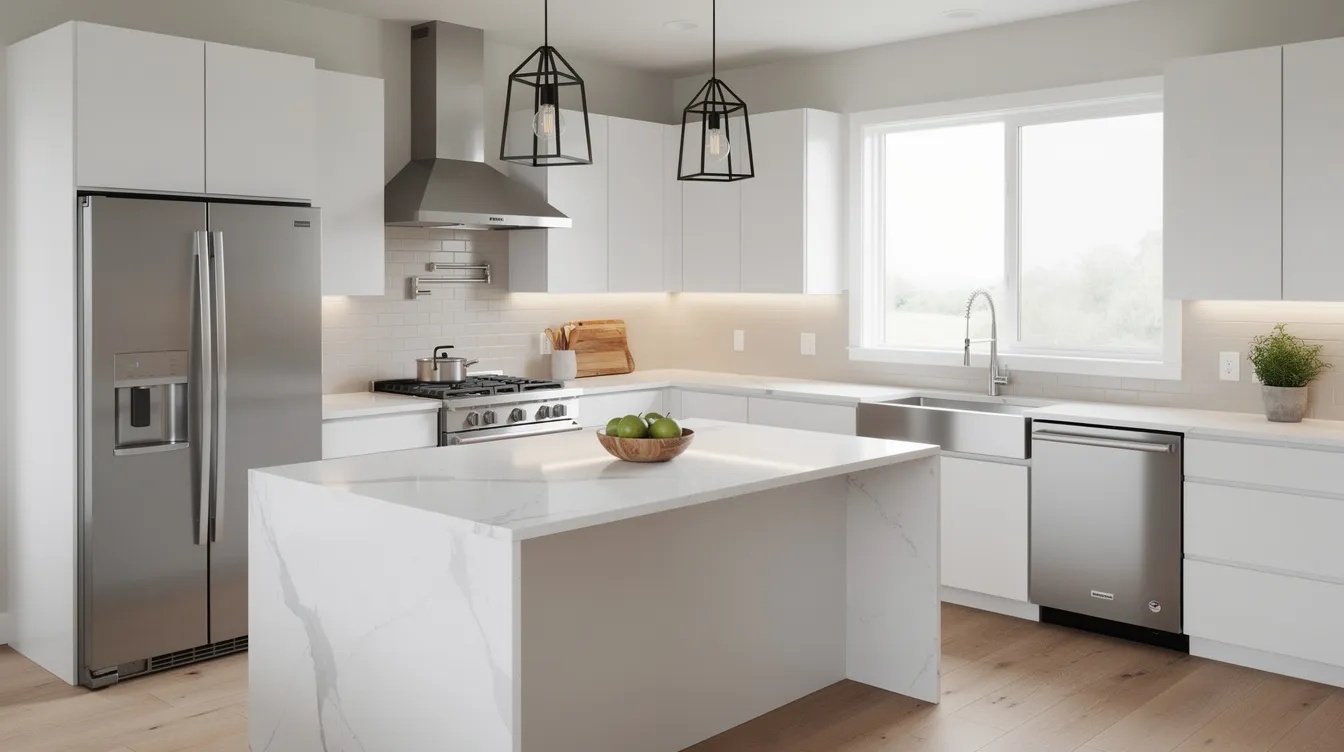
The benefits of quartz countertops make them popular for busy kitchens and bathrooms throughout Colorado, especially for homeowners comparing quartz countertops in Denver to other surface options.
Durability and Lifespan: Quartz countertops are exceptionally durable, with a typical lifespan of 20-30 years under normal household use. The surface has a Mohs hardness of 7, making it highly resistant to scratches from daily cooking.
Stain Resistance: As a non-porous material, quartz resists stains from coffee, red wine, and oils. The surface won’t absorb liquids, and spills wiped within hours leave no trace—unlike porous stone surfaces requiring immediate attention.
Low Maintenance: Quartz countertops require only mild soap and water. No annual sealing is needed, unlike granite countertops that typically require resealing every 6-12 months, and following practical quartz countertop maintenance and cleaning tips will help preserve appearance in Denver’s climate.
Design Variety: Quartz countertop colors and styles range from marble-look patterns to solid colors and concrete aesthetics. This flexibility helps homeowners combine style with function across kitchen and bathroom projects. Quartz countertops are associated with contemporary styles of décor and may not suit traditional or rustic aesthetics.
Resale Value: NAR data suggests that kitchens with updated quartz can boost home values by 5-7% in competitive markets like Highlands Ranch, as buyers tend to view durable countertop surfaces positively.
Cons of Quartz Countertops
Even quality materials have limitations. Here are the disadvantages of quartz countertops every homeowner should consider, including how much quartz countertops cost to install in Denver when you are budgeting for your project.
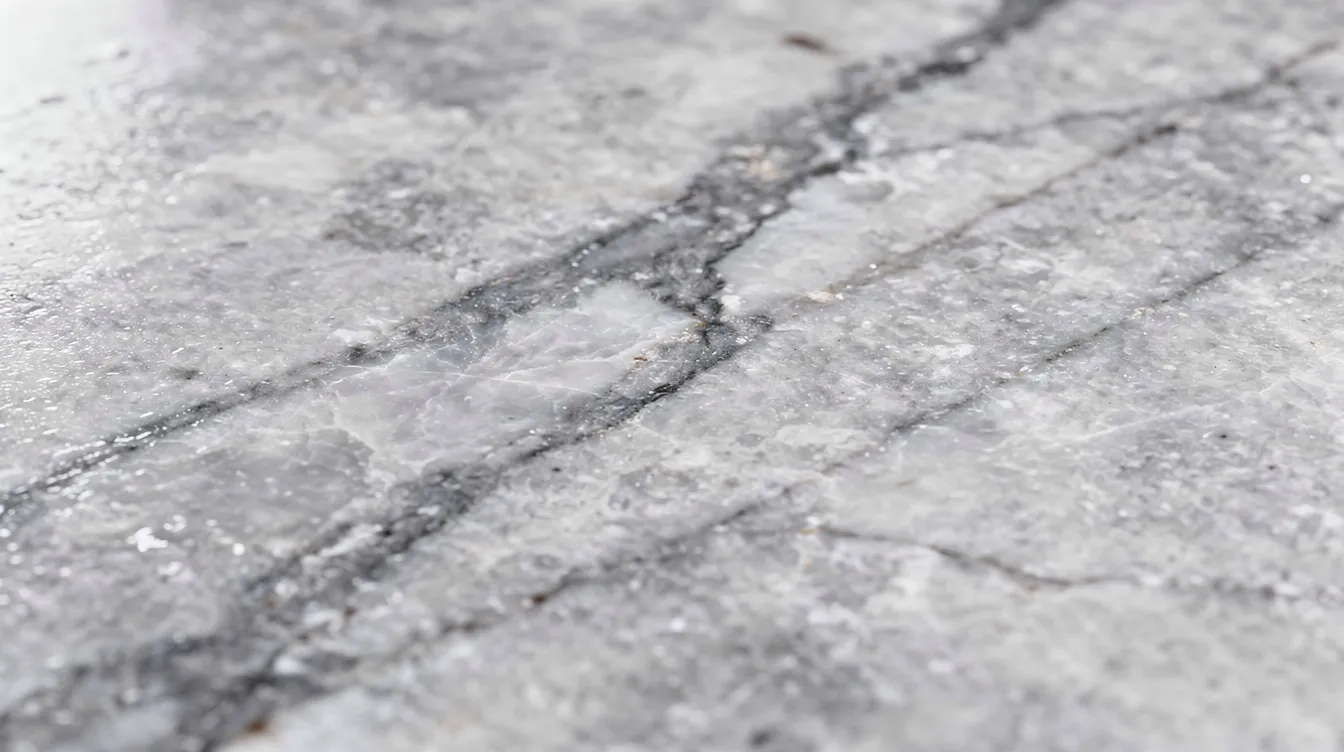
Heat Sensitivity: While quartz minerals are heat resistant, the resin binders degrade above 300-350°F. Hot pans placed directly on the surface can cause scorching or discoloration. Always use hot pads or trivets—this is among the most common problems with quartz countertops.
Cost: Quartz countertops typically cost $50- $ 150 per square foot installed in Colorado, including fabrication. This represents a higher upfront investment than laminate or tile options.
Edge Chipping: Do quartz countertops chip easily? Not under normal use, but heavy impacts from dropped cast-iron cookware can chip edges and corners, particularly near sinks. Professional repairs typically cost $200-500.
Indoor Only: Direct sunlight and UV rays break down resins over 1-2 years, causing fading. Quartz is unsuitable for outdoor patios in Colorado, where granite thrives.
Visible Seams: Large kitchens requiring multiple slabs will have seams measuring 1/16-1/8 inch, filled with color-matched epoxy. Though less conspicuous than with natural stone due to the consistency of patterns, they remain visible in open layouts.
Installation Requirements: At 20-25 lbs per square foot, quartz installation is not a DIY project. Professional templating and cabinet reinforcement are essential and add to the total project cost.
Quartz vs Granite Countertops
The quartz vs granite countertops comparison is common among Colorado homeowners, and some also want to understand quartz countertops vs quartzite countertops pros and cons before committing to a material. Both materials fall within similar price ranges, $40-120 per square foot, for mid-range options.
Factor | Quartz | Granite |
|---|---|---|
Maintenance | No sealing required | Seal every 6-12 months |
Heat Tolerance | Moderate (use trivets) | Superior |
Stain Resistance | Excellent (non-porous) | Good when sealed |
Pattern Consistency | Uniform across slabs | Natural variation |
Outdoor Use | Indoor only | Suitable outdoors |
For the perfect countertop material, quartz vs granite decisions, consider lifestyle: busy families preferring low maintenance often favor quartz, while heavy cooks who use high heat may lean toward granite for certain zones. |
Quartz Countertops Cost, Durability, and Low Maintenance
Cost: Colorado projects typically range from $50-75 per square foot for entry-level designs, $75-100 per square foot for mid-range designs, and $100-150+ per square foot for premium patterns with complex fabrication when you work with professional granite and quartz fabrication and installation.
Durability: The 20-30-year lifespan of a quartz countertop reflects proper installation by a skilled professional. Chips or cracks most commonly occur due to impacts on unsupported overhangs.
Maintenance: Are quartz countertops hard to maintain? No—they’re considered low-maintenance countertops. Daily care involves wiping with mild soap and water. Avoid abrasive pads that dull polish over time. No specialized cleaners or sealing required.
Are Quartz Countertops Worth It?
Are quartz countertops worth it? For Colorado homeowners planning to stay 7-10+ years, the combination of durability, stain resistance, and aesthetic flexibility typically justifies the investment. Long-term savings from eliminating sealing costs offset some of the premium over natural materials.
Quartz may not suit strictly budget projects under $5,000, outdoor kitchens exposed to direct sunlight, or cooking zones with constant high heat exposure from hot pots and pans.
Who Should Choose Quartz Countertops?
Quartz excels for specific households:
- Busy families need quartz countertops for busy kitchens, where spills and constant use are routine
- Low-maintenance seekers who prefer avoiding sealing schedules
- Design-conscious remodelers wanting specific marble-look or solid color aesthetics
- Resale-focused homeowners updating properties for Colorado’s competitive market
Is quartz a good countertop for bathrooms? Yes—the non-porous surface resists water, cosmetics, and bacteria better than porous materials like soapstone, making it an excellent choice for vanities.
EXPERT TIP: Quartz countertops are manufactured surfaces made with real quartz crystals, along with other minerals and pigments, bound together with a resin.
How to Choose the Right Quartz Countertop
When selecting quartz countertop colors and styles, consider your cabinets, flooring, and light levels. Colorado’s bright, high-altitude sunlight reveals undertones in whites and grays more prominently than showroom lighting suggests.
Custom quartz countertops options include edge profiles (ogee, bullnose, square), backsplash heights, and sink cutouts. Work with a local quartz countertop fabricator near you for precise templating and professional installation, or take advantage of specialized countertop design consulting to coordinate materials and finishes. Granite Direct guides homeowners through slab selection, helping match patterns to specific kitchen conditions.
PRO TIP: Quartz countertops require professional installation due to their weight and the need for precise measurements and leveling.
Conclusion: Weighing the Pros and Cons of Quartz Countertops
The pros and cons of quartz countertops balance significant benefits—non-porous, stain-resistant, exceptional durability, and low maintenance—against real limitations, including heat-damage risk, higher cost, and indoor-only suitability.
For many Colorado kitchens and bathrooms, quartz represents durable countertops that combine style with practical performance. When chosen thoughtfully and installed professionally, quartz surfaces serve reliably for decades.
FAQ: Pros and Cons of Quartz Countertops: Questions Colorado Homeowners Ask
Are quartz countertops worth it for Colorado homes specifically?
Quartz countertops often provide strong value in Colorado’s dry climate, where the non-porous surface prevents staining from spills that quickly absorb into unsealed natural stone. Homeowners love that updated quartz photographs well in online listings, supporting resale value in competitive Front Range markets.
Do quartz countertops chip easily on edges and around sinks?
Chips are uncommon under normal use, but possible from heavy dropped items near edges. Rounded-edge profiles reduce risk by approximately 40% compared to sharp, square edges. Professional fabricators can repair small chips without full slab replacement.
Are quartz countertops hard to maintain in the long run?
Quartz requires minimal care—daily wiping with mild soap handles most cleaning needs. No sealing required, no specialized products necessary. Avoid abrasive scrub pads and direct high heat to maintain beauty over 15+ years.
Is quartz a good countertop choice for bathrooms and laundry rooms?
Yes—quartz resists water, cosmetics, and cleaning products effectively. The non-porous surface prevents mildew growth in steamy bathrooms better than many other natural stone countertops, but it requires more maintenance to achieve a more natural look, with frequent sealing.
What are the common problems with quartz countertops to watch for?
Heat damage from hot pans, edge chips from heavy impacts, visible seams in large layouts, and UV fading if exposed to direct sunlight outdoors. These issues are mostly preventable with proper care and indoor use.
What Makes Quartz an Engineered Stone?
Quartz is considered an engineered stone because it is made by combining crushed natural quartz minerals with resins, pigments, and binding agents to create a finished slab. Unlike natural stone, which is quarried and polished into usable surfaces, engineered quartz is manufactured to deliver more consistent color, pattern, and performance. This process helps create a non-porous, low-maintenance countertop material that resists staining better than many natural stone surfaces, while still offering the durable, upscale look homeowners want for kitchens and bathrooms.
Ready to Explore Custom Quartz Countertops with Granite Direct?
Colorado homeowners can contact Granite Direct to get a quote and discuss custom quartz countertops for kitchens, bathrooms, and whole-home remodels. Visit our slab yard to compare quartz countertop colors and styles in person, review edge profiles, and receive detailed quotes for fabrication and installation throughout Denver and surrounding communities.