


Table of Contents

Quartzite vs. Marble Countertops is the comparison we hear most from Denver homeowners shopping for natural stone countertops with bright white backgrounds and soft gray veining. Here’s the short version: quartzite is a metamorphosed sandstone that’s harder than glass and shrugs off lemon juice, while marble is a metamorphosed limestone made of calcite that scratches and etches more easily but offers a depth and softness of veining nothing else quite matches. Both are genuine natural stone and both are beautiful. They just behave very differently once they’re in your kitchen.
We cut, polish, and install both stones every week in our Denver warehouse, so this guide focuses on what happens in real life after installation, not just what a spec sheet says.
The Short Answer: Which Countertop Material Wins?
If your kitchen handles frequent cooking, kids, and weekend entertaining, choose quartzite. It’s the more durable stone of the two: it resists scratches, it won’t etch from citrus or wine, and it holds a polished finish for decades with basic care. That makes it the stronger countertop material for high traffic kitchens. If you want the classic look of Carrara or Calacatta and you’re comfortable with a surface that develops a patina over time, marble remains a gorgeous choice, especially in bathrooms and lower-traffic spaces.
The mistake we see most often isn’t choosing the wrong stone. It’s buying a slab labeled quartzite that behaves like marble. We’ll show you how to avoid that below.
How Each Natural Stone Forms, and Why It Matters on Your Countertop

What Is Quartzite?
Quartzite starts life as quartz-rich sandstone. Heat and pressure deep in the earth recrystallize the sand grains and the silica cement holding them together, fusing everything into a dense, interlocking mass. That interlocking structure is what makes quartzite one of the hardest natural stones used for countertops. Geology.com‘s overview of how quartzite forms and why it’s so tough puts it at about 7 on the Mohs hardness scale, which is why a true quartzite will scratch glass and resist a steel knife blade. Its exceptional strength rivals granite’s durability and, in some respects, exceeds it.
Many of the most sought-after white and light-gray quartzites come from Brazil, where we source slabs directly from the quarries. If you’re leaning this direction, our quartzite countertops page shows what’s typically available.
What Is Marble?
Marble begins as limestone. Metamorphism recrystallizes its calcite into interlocking crystals that polish to a deep, luminous glow. Calcite is soft, though, rating about 3 on the Mohs scale according to Geology.com‘s marble profile. It’s also calcium carbonate, the same compound in antacid tablets, which is exactly why acidic substances react with it. That chemistry is the root of nearly every marble complaint you’ve ever heard.
In return, marble offers timeless elegance. No engineered product has managed to replicate its softness and luminosity, which is why designers keep returning to it. Explore the options on our marble countertops in Denver page.
Marble and Quartzite Side-by-Side
Here’s how the two stones compare on the factors that matter most for a countertop:
Factor | Quartzite | Marble |
|---|---|---|
Parent rock | Sandstone | Limestone |
Main mineral | Quartz | Calcite (or dolomite) |
Mohs hardness | About 7 | About 3 |
Scratches from knives | Rarely | Yes |
Etches from acids | No (true quartzite) | Yes |
Sealing | Every 2–3 years (dense slabs) to yearly (porous slabs) | About twice a year |
Heat resistance | Excellent | Good |
Fabrication difficulty | High | Moderate |
Best fit | Busy kitchens, islands, outdoor kitchens | Bathrooms, fireplaces, bars, low-traffic kitchens |
The takeaway: quartzite gives you most of marble’s look with far better everyday performance, and marble gives you an unmatched look in exchange for more care.
Comparing Durability in Real Kitchens: Scratches, Etching, and Stains
When you’re comparing durability, think about the surface’s everyday use, not a lab test.
Scratch Resistance
Quartzite is harder than your knives, your cookware, and the grit that ends up on every countertop. Marble is softer than all three. On marble, sliding a cast-iron pan or cutting directly on the surface will leave marks you can see in the right light.
Etching Is the Real Difference
Etching is not a stain. It’s a duller, lighter spot where acidic exposure (lemon juice, wine, tomato sauce, vinegar, even some cleaning sprays) has chemically eaten into the polished calcite surface. Marble etches, often within minutes. Unlike marble, true quartzite doesn’t etch, so etching concerns essentially disappear. If you’ve read our granite vs. marble comparison, the same principle applies here: calcite-based stones react to acid, and quartz-based stones don’t.
Staining and Sealing
Both stones have some porosity, so both get sealed. Marble absorbs liquids easily, making it more prone to staining. Quartzite’s stain resistance depends on the individual slab, since dense quartzites absorb very little while a few varieties are more porous. Sealer slows absorption of oil, coffee, and wine, giving you time to wipe up spills before they soak in. A sealer can’t stop etching, because etching is a chemical reaction on the surface. Our natural stone care and maintenance guide covers sealing and cleaning products in more detail.
Heat Resistance
Both stones are heat resistant, which makes sense given that they formed under intense heat and pressure underground. A hot pot set down briefly won’t hurt quartzite or marble the way it can scorch the resin in engineered surfaces. That said, extreme heat concentrated in one spot can cause thermal shock near a sink cutout or seam in any stone, so a trivet under a pan straight off a high burner is cheap insurance.
Can Quartzite Really Pass for Marble?
Popular Marble-Look Quartzites
Yes, and that’s a big part of quartzite’s appeal. Taj Mahal delivers warm, creamy tones with soft gold veining. White Macaubas and Cristallo offer cooler, brighter whites with gray movement. Cristallo quartzite can be backlit for dramatic effects, making it a favorite for bar tops and feature islands. Quartzite veining tends to be more linear and stratified. It also has a slightly more crystalline, glassy depth than marble, which many homeowners prefer once they see the two side by side.
Classic Marbles Still Worth Considering
Marble’s veining patterns tend to be softer and more cloudlike. Carrara remains the most approachable marble, with gentle gray feathering on a white background. Calacatta and Statuario offer intricate veining and bold visual drama, which is why they command premium prices. Because every slab has unique veining, we always recommend picking from actual slabs rather than a sample chip. You can browse our live slab inventory before you visit.
The “Soft Quartzite” Problem: How to Know What You’re Buying
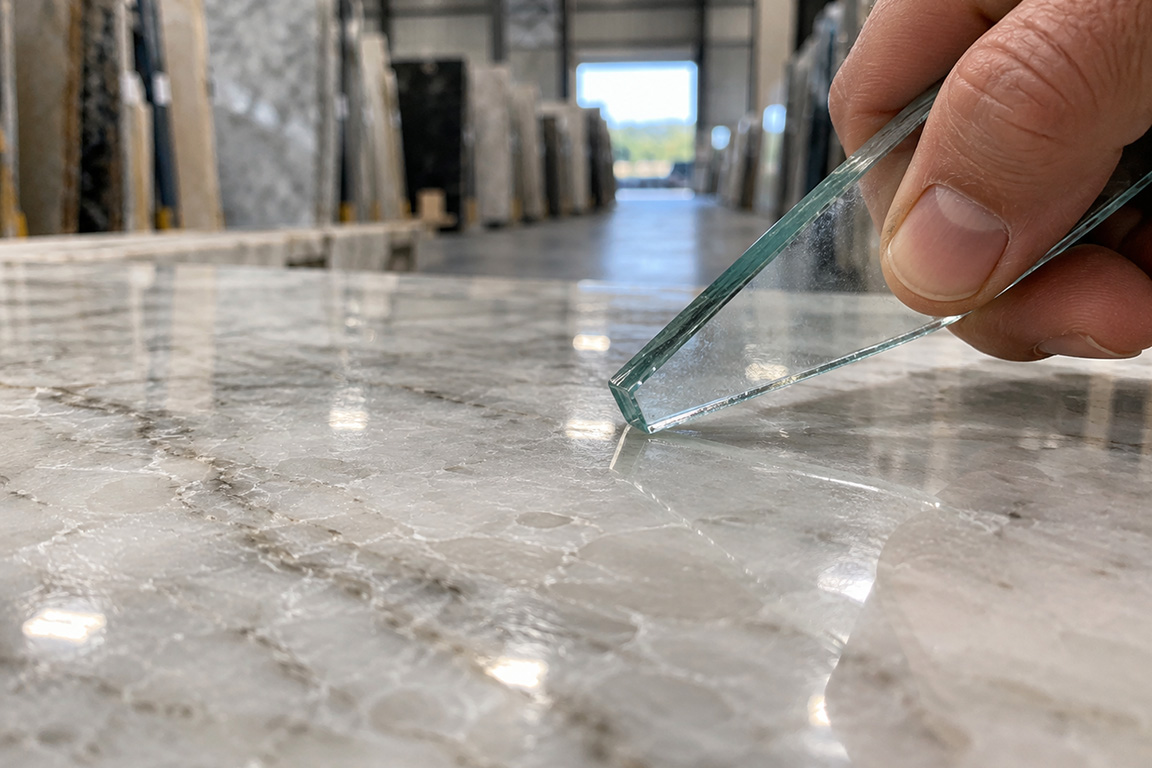
Here’s the issue most countertop articles skip. Quartzite is popular enough that some stones get sold under the name even though they aren’t quartzite. Super White is the classic example. The Natural Stone Institute’s consumer site explains that Super White is actually a dolomitic marble, harder than typical marble but still prone to etching and scratching. Whenever you hear the phrase “soft quartzite,” you’re almost always looking at marble.
You don’t need a geology degree to confirm the stone type. Two simple tests, both outlined in the Natural Stone Institute’s stone sleuth testing guide, will tell you what you’re dealing with.
The Glass Scratch Test
Press a sharp corner of the sample firmly against a glass tile and drag it. True quartzite bites into the glass and leaves a scratch you can feel. Marble and dolomite glide across without scratching it.
The Etch Test
Place a few drops of lemon juice or vinegar on the sample, wait 5 to 10 minutes, wipe it off, and look at the spot from a low angle. A dull ring means calcite or dolomite. No change means you’re looking at genuine quartzite.
We encourage these tests in our showroom. A fabricator who handles stone daily should be glad to help you run them.
Cost Comparison: What Quartzite and Marble Cost in Denver
Price overlaps more than most people expect. Mid-range quartzites and entry-level Carrara often land in similar territory, while rare Statuario and top-tier Calacatta slabs are premium materials that can cost more than almost anything else in the warehouse. Material is only part of the story, though. Quartzite’s hardness means slower cutting, more diamond tooling wear, and more careful edge work, so fabrication often costs more than it does for marble. Your final number also depends on project size, edge profile, and cutouts.
Our price for quartzite countertops guide breaks down the numbers in detail. Buying at wholesale with posted slab pricing helps either way, since you see the real material cost before anyone quotes labor. For smaller projects like a vanity, remnants can cut costs further. Every slab we sell goes through our in-house fabrication and installation process, with most projects finished within two to three weeks of selection.
Long-Term Value
Upfront price only tells half the story. Quartzite’s maintenance costs are lower than marble’s over time. Fewer sealing sessions and no professional etch-removal visits add up across the 20-plus years a countertop stays in place. Marble can hold its value beautifully too, but mostly for owners who treat its patina as part of the appeal rather than damage to fix.
Maintenance Requirements in a Colorado Home
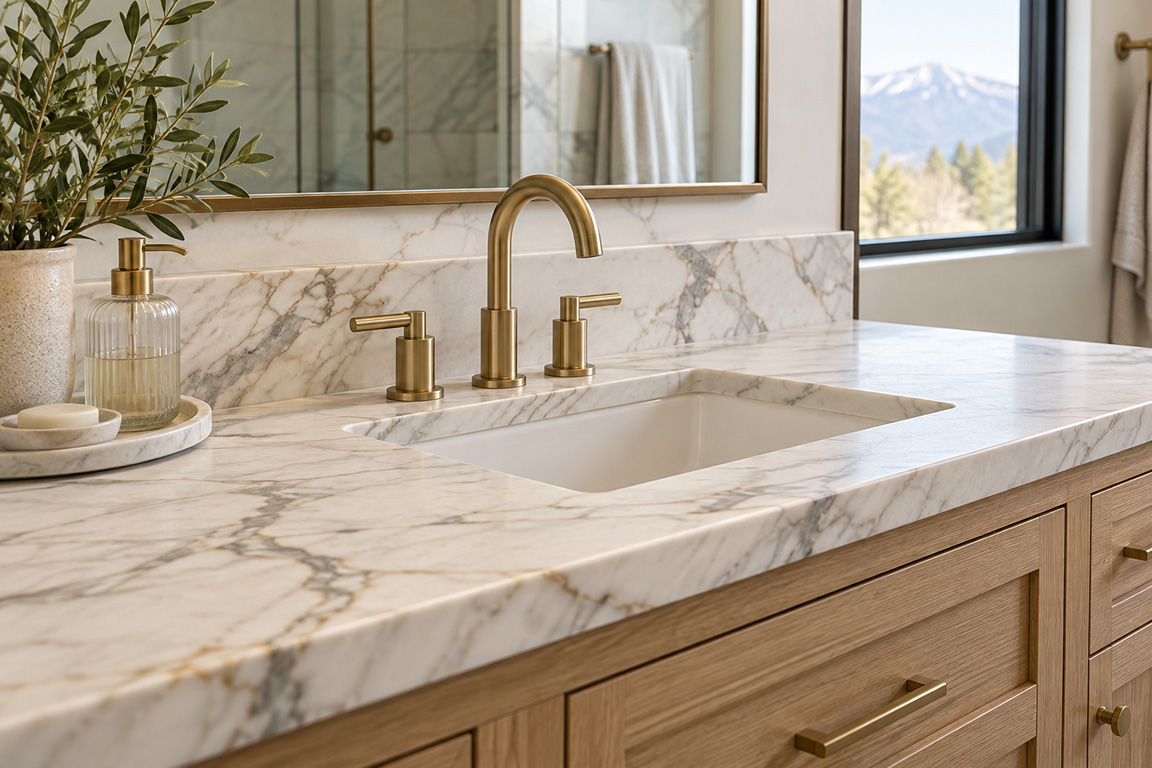
The maintenance requirements for these two stones differ more than their looks suggest, so match the stone to your daily habits.
Is Quartzite Really Low Maintenance?
Close to it. Regular maintenance for both stones is simple: wipe with warm water and a pH-neutral stone cleaner, and skip vinegar-based and bleach-based sprays. The difference is in periodic sealing. Quartzite requires sealing every 2-3 years. That’s the typical interval for dense slabs like Taj Mahal, while more porous quartzites such as White Macaubas may need it annually, so do a quick water-bead test each year. Quartzite generally needs less frequent sealing than marble. Marble usually needs frequent sealing, about twice a year, and you should wipe up acidic spills right away. If you want less maintenance, quartzite is the easier stone to live with.
Honed vs. Polished Finishes
Finish choice matters more with marble than most homeowners realize. Etch marks show most clearly on a polished surface, where the dull spot contrasts against the shine. A honed (matte) marble finish hides etching far better and ages into a soft, European-style patina, which is a big part of marble’s charm. Quartzite looks excellent polished, honed, or leathered, since you’re not fighting etching in the first place.
Which Stone Belongs in Which Room?
The Busy Family Kitchen
If you cook frequently, quartzite is our clear recommendation for a busy family kitchen, from perimeter counters to the island. It’s also the better choice for a waterfall edge design, where the stone is the focal point and takes the most daily contact.
Bathrooms, Bars, and Fireplaces
In a primary bathroom, marble shines. Toothpaste and the occasional perfume spill are far less aggressive than kitchen acids, and the timeless beauty of Carrara or Calacatta suits the space perfectly. Powder rooms, fireplace surrounds, and bar tops that see light use are also great places for marble. For high-traffic areas and commercial spaces, such as restaurant bars or granite and marble reception desks, quartzite usually earns its place.
Outdoor Kitchens
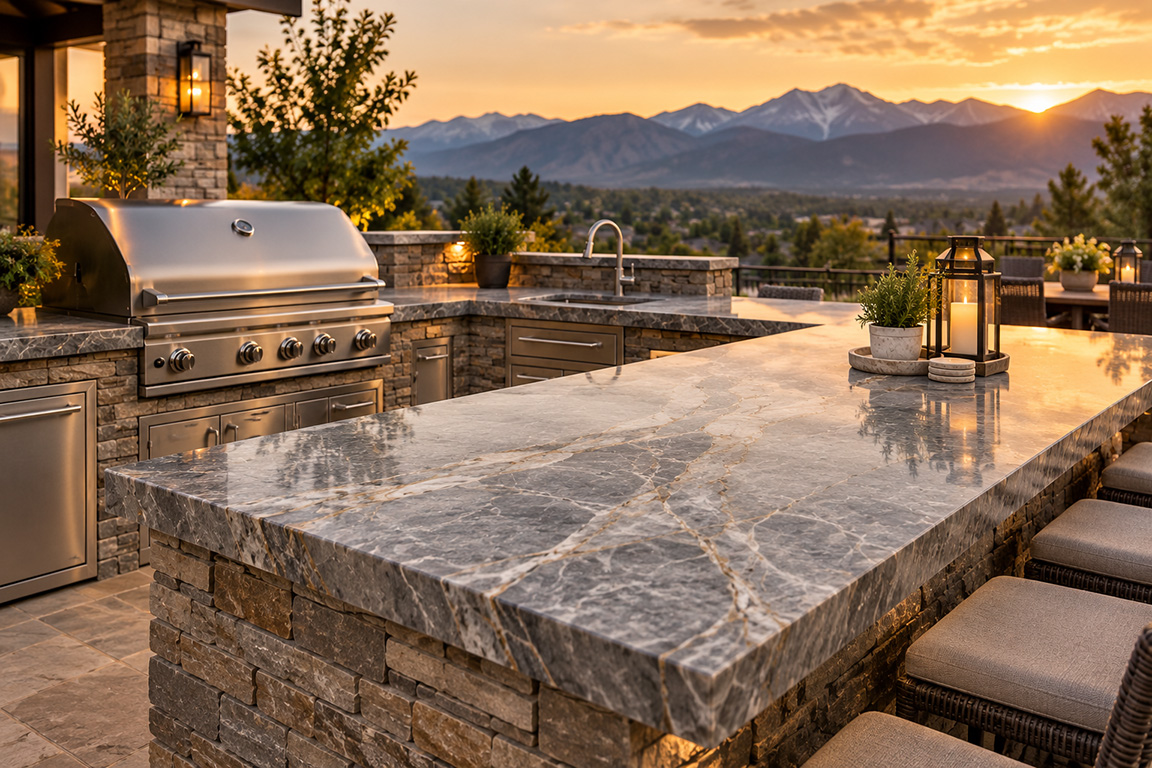
For outdoor kitchens along the Front Range, choose quartzite. Its low absorption and toughness handle intense sun and repeated freeze-thaw cycles well, while marble tends to lose its polish and weather outdoors.
Mixing Both Stones
Many Denver homeowners split the difference: quartzite in the kitchen, marble in the bathrooms. You get a consistent white-stone look throughout the house and put each stone where it performs best. Pairing the right edge profile with each stone completes the look, and a countertop design consultation can help you plan the full combination around your design preferences.
Don’t Confuse Quartzite With Quartz
The names sound alike, but they’re completely different materials. Quartzite is 100 percent natural stone. Engineered quartz is made from crushed quartz bound with resin and pigments. The Natural Stone Institute’s comparison of natural quartzite and engineered quartz covers the manufacturing differences in depth. If you want a marble look with a nearly non-porous surface and uniform patterning, engineered quartz is worth a look. Our post on the pros and cons of quartz countertops explains where it fits and where it doesn’t.
Compare Quartzite and Marble Slabs in Person at Our Denver Showroom
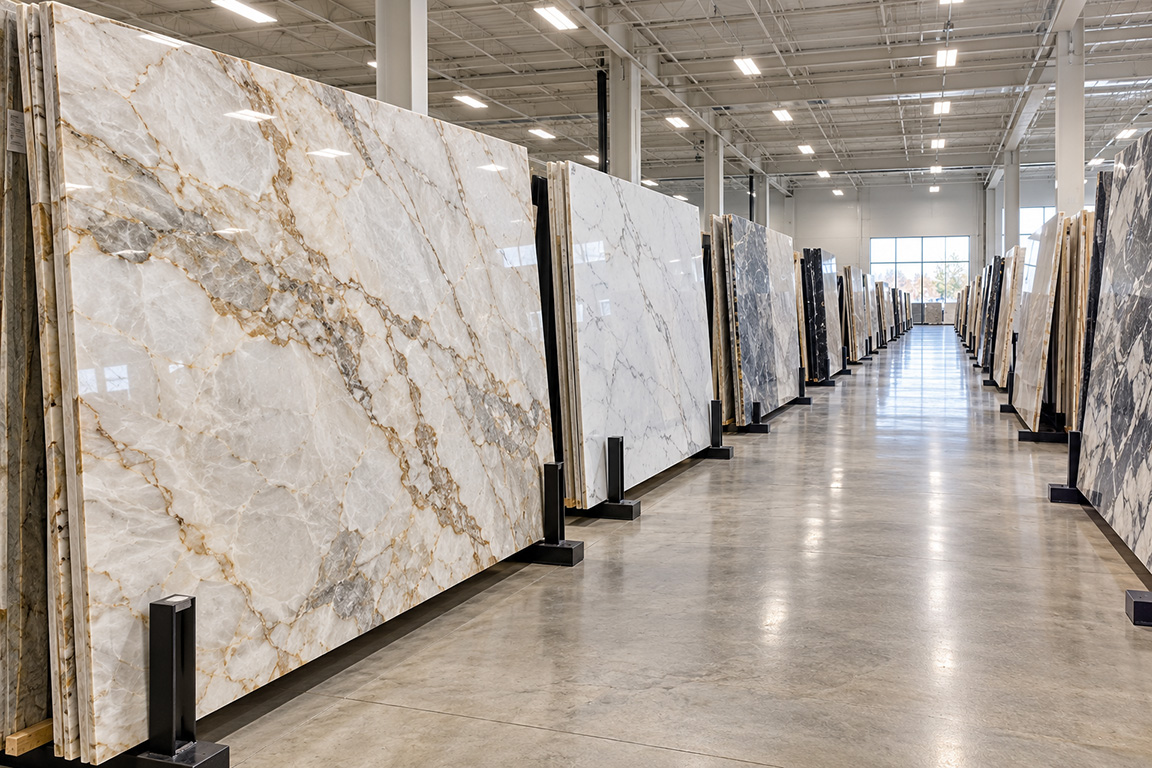
Photos never tell the full story with white stone. What makes quartzite so striking is its depth, and marble’s glow only shows up in person, under real light, at full slab size. Our 10,000-square-foot Denver warehouse holds more than 275 slabs of granite, quartzite, quartz, and marble, each with a clearly posted price. Bring a lemon and a glass tile if you’d like to test samples yourself, and our team will offer expert guidance as you test.
We serve homeowners across Denver, Thornton, Westminster, Arvada, Lakewood, Littleton, Highlands Ranch, Parker, Centennial, and the rest of the Front Range. Call (303) 282-8317 to schedule a visit or request a quote.
Frequently Asked Questions About Quartzite vs. Marble
Is quartzite more expensive than marble?
Often, but not always. Entry-level marble like Carrara usually costs less than quartzite, while premium marbles such as Calacatta can cost more. Quartzite’s hardness also raises fabrication costs, so compare installed prices, not slab prices alone.
Does quartzite etch like marble?
True quartzite doesn’t etch from household acids like lemon juice, wine, or vinegar. If a stone sold as quartzite etches, it’s likely a dolomitic marble. A simple lemon juice test on a sample will confirm what you’re buying.
Can you use marble countertops in a busy kitchen?
Yes, as long as you accept that marble will etch and develop a patina. A honed finish hides etching much better than a polished finish. If you want a pristine, uniform surface year after year, quartzite is the better kitchen choice.
Do quartzite countertops need to be sealed?
Yes. Quartzite resists etching, but most slabs have some porosity. Dense quartzites typically need resealing every 2–3 years, while more porous slabs may need it annually. Reseal whenever water no longer beads on the surface.
Is quartzite or marble better for an outdoor kitchen in Colorado?
Quartzite. It stands up much better to strong sun, low humidity, and repeated freeze-thaw cycles than marble, which tends to weather and lose its polish outdoors.