


Table of Contents
Introduction – Price for Quartzite Countertop
The price for quartzite countertops costs between $65 and $200 per square foot installed, with most homeowners paying $80 to $150 per square foot, depending on the quality of the quartzite slab, its rarity, and the complexity of the installation. This natural stone commands a higher price tag than many other countertop materials due to its exceptional durability, natural beauty, and the specialized labor required for fabrication.
This guide covers every pricing factor homeowners need to understand when budgeting for quartzite countertops—from base material costs and installation fees to edge profiles, sink cutouts, and regional price variations. Whether you’re planning a full kitchen renovation or replacing a bathroom vanity, this information will help you create an accurate budget and avoid costly mistakes during the purchasing process.
Direct answer: For a typical 30 to 40 square foot kitchen countertop installation, expect to pay $2,400 to $8,800 total. A 30 square foot bathroom project with moderate specifications averages around $4,000 nationally.
By the end of this guide, you’ll understand:
- How quartzite costs break down between materials, fabrication, and labor costs
- Which quartzite varieties fall into budget, mid-range, and premium price tiers
- Key factors that significantly increase or decrease your final cost
- How quartzite compares to granite, quartz, and marble countertops
- Strategies to save money without sacrificing quality
Understanding these factors will help you make an informed decision about purchasing and installing quartzite countertops.
What is Quartzite?
Quartzite is a natural stone prized for its exceptional durability and striking natural beauty, making it a top choice for countertops. Formed from sandstone that has been subjected to intense heat and pressure deep within the earth, quartzite undergoes a transformation that results in a dense, hard surface composed primarily of quartz minerals. This process gives quartzite a mineral hardness of 7-8 on the Mohs scale, making it more resistant to scratches and stains than many other countertop materials.
Unlike engineered surfaces such as quartz countertops, quartzite is entirely natural, with each slab featuring unique veining and color variations. Its durability rivals that of granite, while its elegant appearance often draws comparisons to marble. Homeowners appreciate quartzite countertops for their low maintenance requirements—routine cleaning with mild soap and water is usually sufficient to keep them looking pristine. Thanks to its resistance to daily wear and tear, quartzite is an excellent choice for busy kitchens and bathrooms where both style and strength are essential.
Understanding Quartzite Countertop Pricing
Quartzite pricing operates differently from engineered materials like quartz countertops because each slab must be quarried, transported, and fabricated as a unique piece of natural stone. This creates inherent price variability based on sourcing logistics, slab availability, and market demand—factors that don’t affect manufactured countertop materials.
The total cost of quartzite countertops reflects both the rarity of the stone and the specialized processing it requires. Unlike sandstone or other softer materials, quartzite’s exceptional mineral hardness (rating 7 on the Mohs scale) demands advanced equipment and experienced installers for cutting and shaping.
Intricate or unique patterns increase the price of quartzite countertops.
Thicker quartzite slabs are generally more expensive.
Material Cost Components
The base cost for quartzite slabs ranges from $40 to $120 per square foot for material only, before any fabrication or installation work begins. This wide range exists because quartzite forms through intense geological pressure and heat, transforming sandstone into a harder, denser stone—a process that occurs in limited locations worldwide.
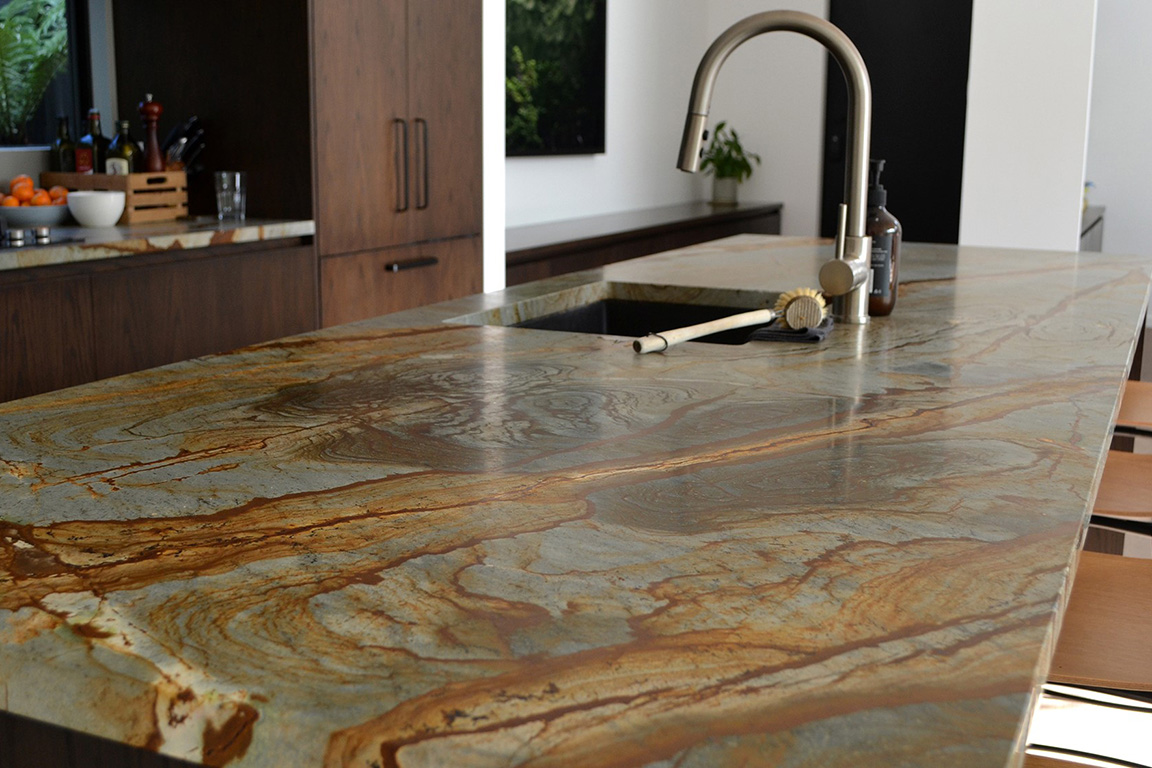
Rarity directly drives material pricing. Common white quartzite with gray veining represents the most accessible option, typically stocked at most stone yards. Rare colors in blue, red, green, or dramatic golden tones command premium prices due to limited availability and high demand from designers seeking unique patterns.
The quality of the individual slabs also affects pricing. Premium quartzite features consistent coloring, minimal fissures, and striking veining patterns, while lower-grade slabs may show more variation or surface imperfections that reduce their cost but also their visual impact.
Installation and Labor Costs
Fabrication and professional installation add $20 to $80 per square foot to your project, depending on complexity and local labor rates. This portion of your budget covers template creation, precision cutting, edge finishing, sink cutouts, and final installation.
Quartzite requires specialized diamond-tipped tools and expertise that exceeds what’s needed for granite or marble. The stone’s hardness means cutting takes longer, tools wear faster, and mistakes during fabrication can be costly to correct. For this reason, experienced installers who regularly work with quartzite typically charge more than general countertop contractors.
These labor costs connect directly to your total project cost, and understanding them helps explain why quartzite installation quotes vary significantly between fabricators. The next section examines specific factors that push prices up or down within these ranges.
Key Factors Affecting Quartzite Countertop Prices
Several key factors determine where your project falls within the $65 to $200 per square foot spectrum. Understanding these variables helps you make informed decisions about where to invest and where you might save money.
Slab Quality and Rarity
The quartzite variety you select creates the most significant price difference in your project. Common white quartzites like Classic White start around $65 per square foot installed, while sought-after varieties like Taj Mahal quartzite cost $90 to $150 per square foot due to their dramatic veining and creamy white background with golden undertones.
Mid-tier options provide excellent choices for homeowners wanting distinctive looks without premium pricing:
- Super White: $70-$100 per square foot installed
- Perla Venata: $90-$100 per square foot installed
- Shadow Storm: $85-$95 per square foot installed
Exotic colored quartzites in blue, red, pink, or green tones reach $100 to $200 per square foot. Blue Roma and Florida Wave exemplify these rare colors that appeal to homeowners, creating statement kitchens or unique design features.
Thickness and Size Requirements
Slab thickness affects both material cost and structural requirements. Standard 3cm (approximately 1.25 inches) thickness is most common for countertops and provides sufficient strength for spanning cabinets without additional support. Thinner 2cm slabs cost less per square foot but may require plywood underlayment, adding hidden labor costs.
Large islands and expansive L-shaped countertops often require multiple slabs, and matching veining patterns across seams demands careful slab selection. These larger projects may require purchasing extra material to achieve visual continuity, which can significantly increase your total cost.
Geographic Location and Availability
Regional price variations create a 10-20% difference for identical quartzite varieties depending on where you live. Proximity to major stone distribution centers reduces transportation costs, while projects in remote areas pay premium freight charges for heavy stone slabs.
The stone yard inventory size also matters. Larger suppliers with extensive slab selections typically offer better pricing than smaller showrooms with limited stock. In some markets, certain quartzite varieties remain consistently available, while in others, the same stone requires special ordering with extended lead times and higher cost.
Local labor rates compound geographic differences—fabrication costs in major metropolitan areas exceed rates in smaller markets, sometimes by $10 to $20 per square foot.
Popular Quartzite Varieties
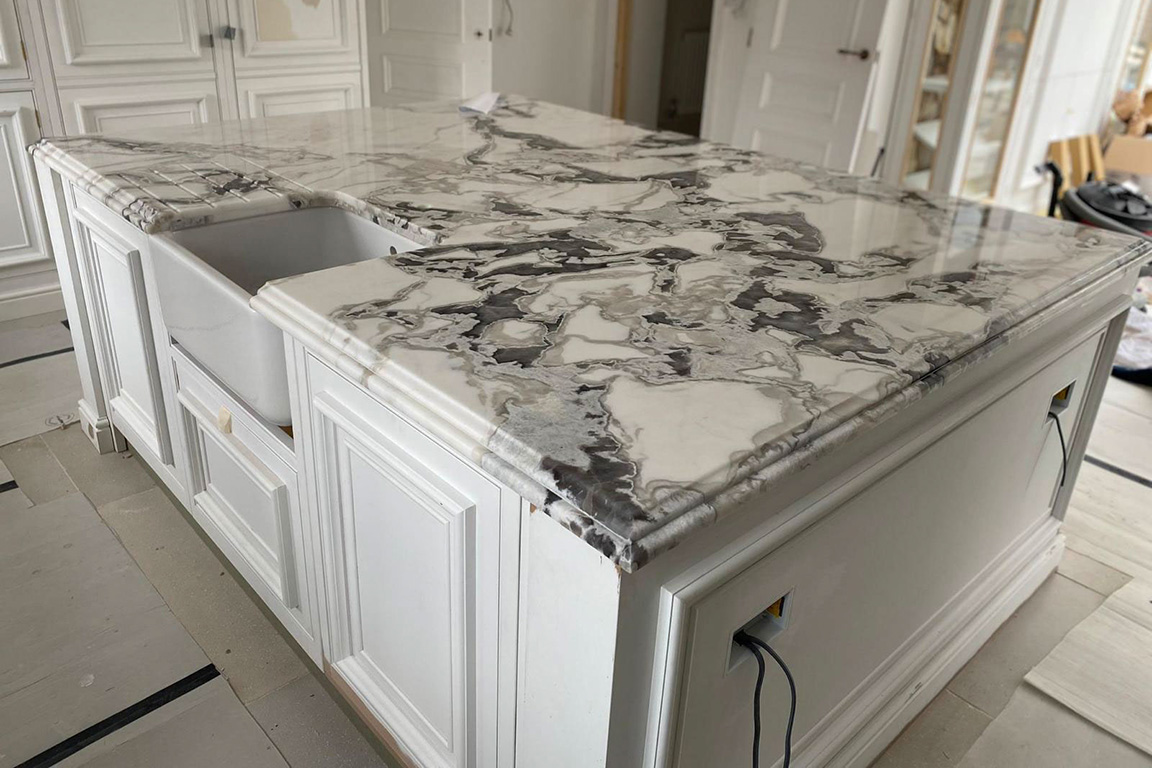
When it comes to quartzite, certain varieties stand out for their unique patterns, colors, and overall appeal. Among the most sought-after is Taj Mahal quartzite, known for its creamy white background and subtle gold veining that brings warmth and sophistication to any space. Mont Blanc quartzite offers a snowy-white base with elegant taupe streaks, making it a favorite for those seeking a clean, modern look. Other popular options include Sea Pearl, with its soft green and gray tones, Fantasy Macaubas, which features dramatic linear veining, and Cristallo, prized for its translucent quality and luminous appearance.
These premium quartzite varieties are often in limited supply, and their rarity can significantly increase their price. Homeowners are drawn to these stones not only for their durability but also for their ability to create a one-of-a-kind focal point in kitchens and bathrooms. When selecting a quartzite variety, consider how its unique patterns and colors will complement your room’s design, natural lighting, and your desired level of maintenance. Investing in a sought-after quartzite can elevate your space and provide lasting beauty for years to come.
Detailed Cost Breakdown and Pricing Comparisons
Building an accurate budget requires calculating all cost components and understanding how quartzite compares to alternative countertop materials. This section provides frameworks for both.
Complete Installation Cost Calculation
Use this step-by-step process to estimate your total project cost:
- Measure square footage accurately: Calculate the surface area of all countertops, including islands and peninsulas, then add 10% for waste and cuts.
- Select quartzite variety and grade: Choose your stone based on appearance preferences and budget, noting that price varies dramatically between varieties.
- Add fabrication and installation costs: Request itemized quotes that separate material, fabrication, and installation line items for comparison.
- Include edge treatments and cutouts: Standard sink cutouts typically cost nothing extra, but edge profiles add $20 to $40 per linear foot, depending on complexity.
For a practical example: A 35 square foot kitchen with mid-range quartzite ($100/sq ft), standard edge profile ($25/linear foot for 20 linear feet), and basic installation would cost approximately $3,500 for stone plus $500 for edge work, totaling around $4,000.
Quartzite vs Other Countertop Material Costs
Understanding how quartzite costs compare to other options helps you make budget decisions based on priorities:
Material | Price Range | Installation Complexity |
|---|---|---|
Quartzite | $60-$200/sq ft | High |
Granite | $40-$150/sq ft | Medium |
Quartz | $50-$120/sq ft | Medium |
Marble | $50-$180/sq ft | High |
Granite countertops offer the most budget-friendly natural stone option, though they lack quartzite’s superior durability and marble-like aesthetic. Granite requires sealing like quartzite, but is more susceptible to scratches and heat damage.
Quartz countertops (engineered stone) provide consistent pricing and appearance since they’re manufactured rather than quarried. They require less maintenance and no sealing, but cannot match quartzite’s natural beauty or heat-resistant properties.
Marble creates a similar visual appeal to white quartzite but demands significantly more maintenance, shows scratches and stains readily, and develops etching from acidic substances. The higher cost of premium marble often accompanies higher long-term maintenance costs.
For homeowners prioritizing durability, natural stone aesthetics, and long-term value, quartzite represents a compelling middle ground—more resilient than marble or granite while offering unique patterns impossible to replicate in engineered materials.
Common Pricing Challenges and Solutions
Budget planning for quartzite countertops benefits from anticipating issues that catch many homeowners off guard.
Unexpected Additional Costs
Hidden costs often include sealing (quartzite requires sealing annually for a wide variety), special cutouts for cooktop installations, backsplash materials, and structural reinforcement for heavy slabs over unsupported spans. Create a line-item budget that includes $500 to $1,000 for these potential additions rather than discovering them after committing to a quote.
Price Variations Between Suppliers
Quotes for identical quartzite varieties can differ by 20-30% between fabricators due to purchasing relationships, overhead costs, and markup practices. Obtain at least three detailed quotes, and ensure each includes the same scope—template, fabrication, edge profiles, installation, and sealing. Comparing quotes with different inclusions leads to costly mistakes during project execution.
Budget Overruns During Installation
Unforeseen complications during installation—discovering uneven cabinets, needing additional cuts for outlets, or addressing existing plumbing issues—create a huge difference between estimated and final costs. Setting aside a 15-20% contingency budget prevents these surprises from derailing your project. This reserve covers both installation complications and the common scenario of deciding mid-project to upgrade edge profiles or add a matching backsplash.
Tips to Save Money on Quartzite Countertops
While quartzite countertops are known for their higher price tag, there are several smart strategies to help you save money without compromising on quality or style. Start by choosing a more common quartzite variety with simpler patterns, as these tend to be more affordable than rare, exotic options. Opting for a thinner slab or reducing the size of your island or countertop area can also help lower material costs.
Shopping around is key—get quotes from multiple suppliers and fabricators to ensure you’re getting the best deal on both materials and labor costs. If you have experience with home improvement projects, you might consider a DIY installation, but keep in mind that working with quartzite requires specialized tools and expertise. Improper installation can lead to costly mistakes and damage, so weigh the potential savings against the risks. By planning carefully and comparing your options, you can enjoy the beauty and durability of quartzite countertops while keeping your project within budget.
Long-Term Value of Quartzite Countertops
Investing in quartzite countertops offers significant long-term value for homeowners. Thanks to their impressive durability and resistance to scratches, stains, and heat, quartzite surfaces can withstand years of daily use with minimal signs of wear. Unlike some other countertop materials, quartzite requires only basic maintenance, making it a low-maintenance option that retains its natural beauty over time.
Quartzite countertops can also significantly increase the value of your home, appealing to future buyers who appreciate the combination of elegance and practicality. While the initial cost may be higher than granite or other materials, the longevity and minimal upkeep of quartzite make it a cost-effective choice in the long run. By choosing quartzite, you’re investing in a surface that not only enhances your living space but also delivers lasting value and performance.
Maintenance Requirements for Quartzite Countertops
Maintaining the beauty and integrity of your quartz countertops is straightforward, but a few key steps will help you avoid costly mistakes. Because quartzite can be porous, it’s important to clean up spills promptly to prevent stains from setting in. Regularly sealing your countertops provides an extra layer of protection against moisture and spills, helping to preserve the stone’s natural appearance.
For daily cleaning, use mild soap and water or a cleaner specifically designed for natural stone. Avoid harsh chemicals and abrasive cleaners, as these can damage the surface or strip away the protective sealant. With proper care, quartzite countertops will resist scratches and stains, maintaining their stunning look for years. By following these simple maintenance practices, you can enjoy the durability and elegance of quartzite without worrying about expensive repairs or replacements.
Conclusion – Price for Quartzite Countertop
Quartzite countertops represent a significant investment, ranging from $65 to $200 per square foot installed, with typical kitchen projects costing $2,400 to $8,800. The final price depends primarily on the quartzite variety selected, project size and complexity, edge treatments, and regional labor rates. Quartzite countertops are also highly versatile, complementing both modern and traditional designs, which makes them a suitable choice for a wide range of interior styles.
To move forward with your new countertops, get inspired with our complete guide on how to choose the right countertop color:
- Measure your countertop areas accurately and calculate the total square footage
- Visit local stone yards to see quartzite slabs in person—photos rarely capture true coloring and veining
- Obtain three or more itemized quotes from fabricators with quartzite experience
- Build your budget with 15-20% contingency for edge upgrades, backsplash additions, or installation complications
Related topics worth exploring include ongoing maintenance requirements (mild soap and water for daily cleaning, avoiding harsh chemicals and abrasive cleaners), sealing schedules for your specific quartzite type, and financing options if spreading the cost over time makes the investment more manageable.
Additional Resources – Price for Quartzite Countertop
- Square footage calculator: Multiply length by width for each countertop section, add 10% for waste
- Edge profile reference: Standard eased edges cost least; ogee, dupont, and mitre profiles add $20-$25 per linear foot; French cove and double bevel reach $30-$40 per linear foot
- Quartzite variety quick reference by price tier:
- Budget ($65-$85/sq ft): Classic White, Super White, basic gray varieties
- Mid-range ($85-$115/sq ft): Perla Venata, Shadow Storm, White Princess, earthy tones
- Premium ($115-$200/sq ft): Taj Mahal, White Macaubas, Blue Roma, rare colors with limited availability