


Table of Contents
Choosing kitchen countertops ranks among the most consequential decisions in any remodel. The surface you select will handle thousands of meals, endure years of daily use, and significantly influence your home’s resale value. This guide breaks down the major good countertop materials, including specific price ranges, maintenance requirements, and honest assessments of where each option excels or falls short.
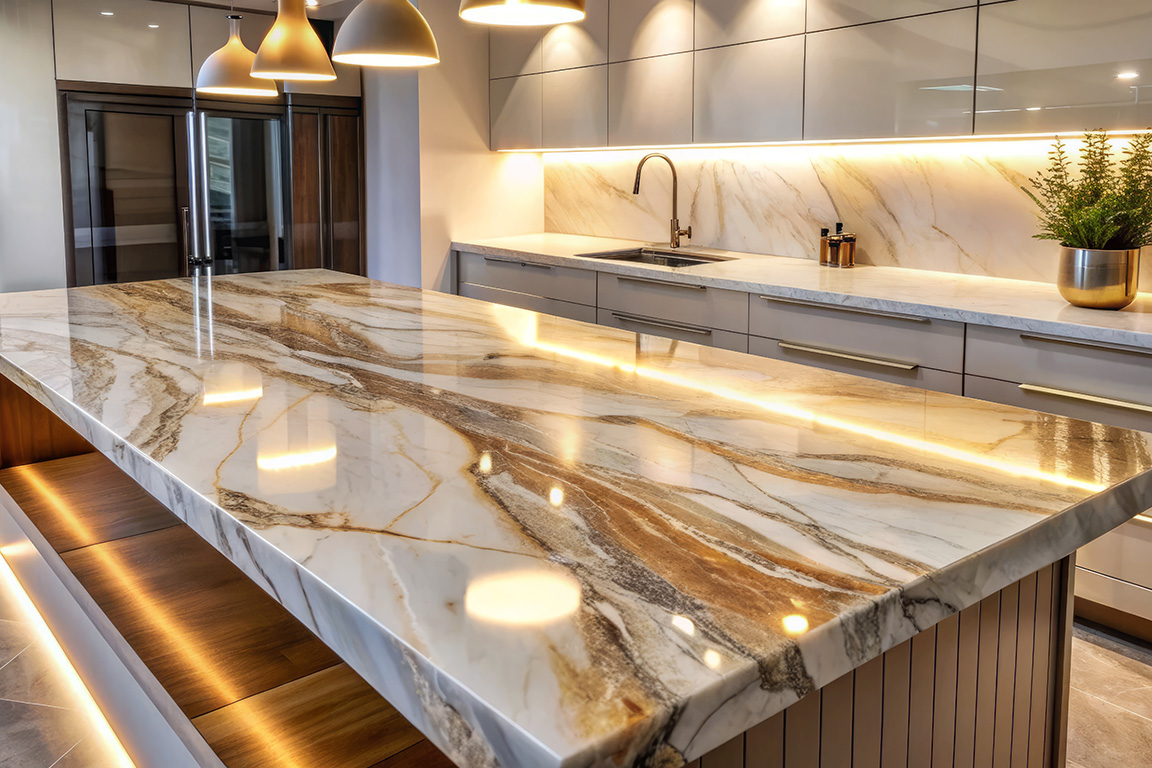
What Makes a Good Countertop for Your Kitchen?
A good countertop—or the best kitchen countertops for your situation—balances durability, maintenance demands, visual appeal, and cost. There’s no single winner because every household cooks, cleans, and entertains differently. What follows are specific, real-world examples and current price ranges to help you decide which countertop material is right for your kitchen.
The four main decision factors for a good countertop:
- Durability: How well does the surface resist scratches, heat damage, and most stains? An incredibly durable countertop handles hot pans, knife slips, and acidic spills without permanent damage.
- Maintenance: Does it require periodic sealing, regular oiling, or just simple cleaning? Low-maintenance options like engineered quartz save time over the long term.
- Aesthetics: What colors, patterns, edge profiles, and finishes match your kitchen style? From warm wood tones to sleek stone material options, appearance drives many decisions.
- Cost: What’s the realistic installed price per square foot, including fabrication and professional installation?
This guide focuses on kitchen use in 2026, but most materials also work in bathrooms, laundry rooms, and bars. The next sections quickly compare the best countertop choices like quartz, granite, and butcher block before moving to more niche countertop options, including slate countertops, concrete countertops, and emerging engineered surfaces.
Whether you’re seeking high-quality countertops, the best countertops for kitchens on a budget, or researching the best materials for kitchen countertop durability, these countertop recommendations cover every price point and lifestyle.
Quartz Countertops
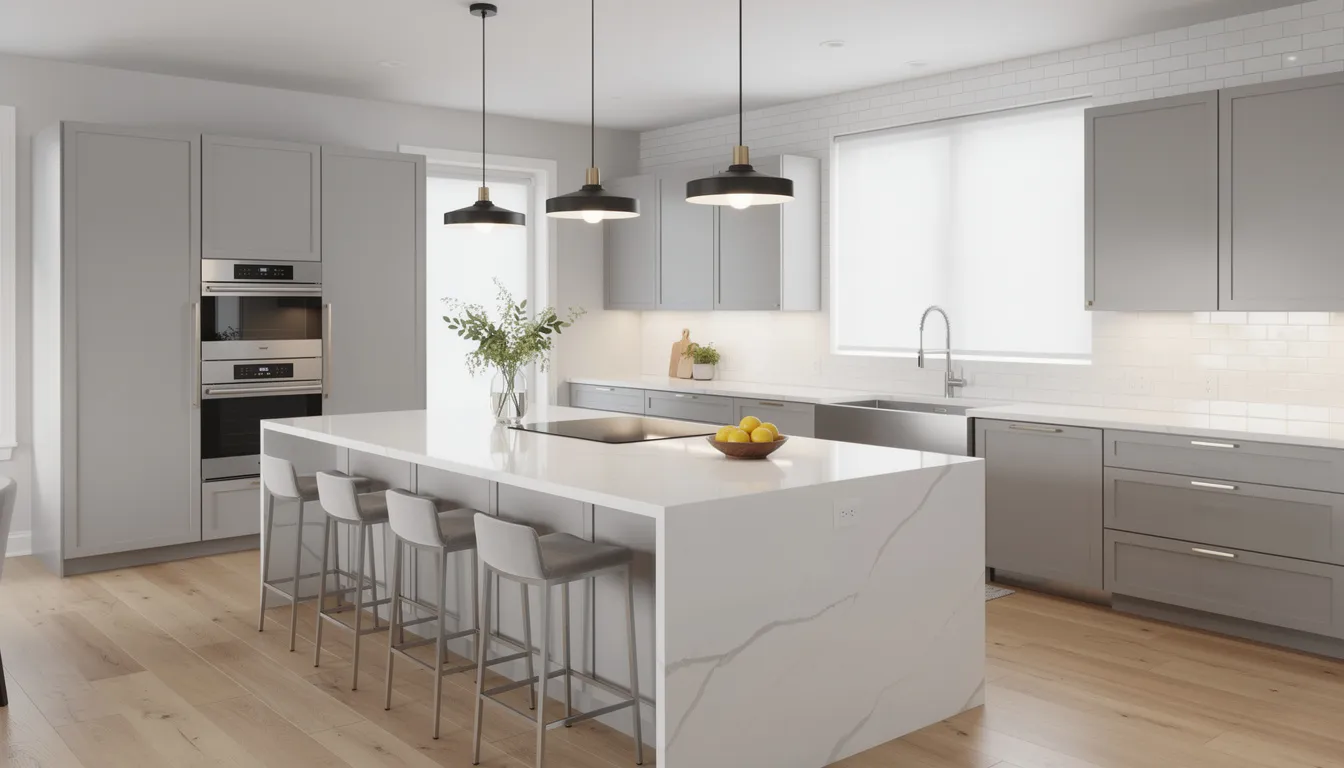
Quartz countertops are engineered stone made from approximately 90-95% crushed natural quartz, polymer resins, and pigments. This countertop material surged in popularity during the early 2000s when advances in resin-binding technology created surfaces that mimic real natural stone while eliminating many maintenance headaches.
Why quartz qualifies as a top-tier kitchen countertop:
- Non-porous surface requires zero sealing—ever
- Highly resistant to bacteria, making it ideal for food prep areas
- Extremely consistent in color and pattern, unlike the variability of natural stone
- Stain-resistant against coffee, wine, and most household spills
- Available in patterns mimicking marble, granite, or solid contemporary colors
Concrete price guidance:
Expect to pay approximately $80–$150 per square foot installed in 2026. Complex edge profiles, sink cutouts, and seams in large kitchens push costs toward the higher end. A typical 30-square-foot kitchen island runs $2,400–$4,500 fully installed.
Limitations to consider:
- Not fully heat resistant—placing red-hot pans directly on the surface can scorch the resin
- Seams may be visible in large L-shaped or U-shaped kitchens
- UV exposure can cause discoloration over time, limiting outdoor use
Compared to granite countertops, engineered quartz offers easier maintenance. Compared to marble countertops, it delivers far better stain resistance. For busy families who want durable countertops without annual sealing rituals, quartz remains the go-to recommendation.
Granite Countertops
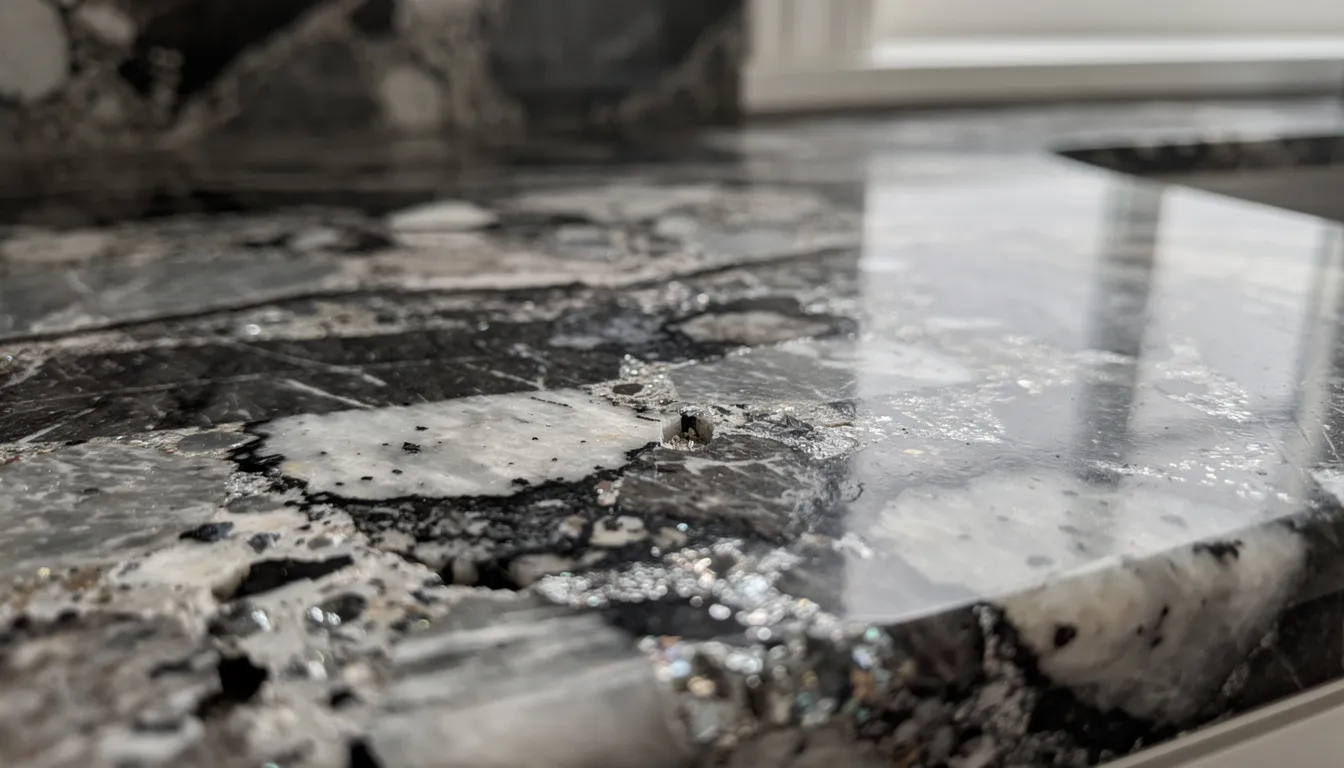
Granite has been a reliable, good choice for a granite countertop for decades, particularly in busy family kitchens where strength and heat resistance matter most. This natural stone forms deep in the earth under intense pressure and heat, creating the distinctive mineral patterns that make each slab unique.
Performance characteristics:
- Heat resistant up to approximately 1,200°F—you can place hot pans directly on the surface
- Highly scratch-resistant due to the quartz and feldspar crystal composition
- Adds genuine resale value in mid-range and upscale homes
- Each slab offers one-of-a-kind veining and mineral deposits
Concrete pricing:
Material and professional installation typically run $60–$120 per square foot in 2026, depending on slab rarity and regional labor costs. Exotic colors like blue or fantasy brown command premium pricing, while common gray and black options stay more affordable.
Maintenance reality:
Most natural stones require proper sealing every 1–2 years to prevent staining from oils and acids. Daily cleaning with mild soap and water keeps the surface in excellent condition. Neglecting the sealing schedule can lead to permanent staining—one documented case showed unsealed granite absorbing red wine permanently.
Design aspects:
- Popular colors include white with gray veining, solid black, and dramatic blues
- Common edge profiles: eased (simple square), bullnose (rounded), and ogee (S-curve)
- Unique mineral patterns mean your countertop differs from every other Denver granite countertop installation
Granite countertops remain the standard for homeowners seeking natural stone with proven performance. In direct heat tests, granite consistently outperforms quartz, which showed scorch marks from prolonged pan contact in comparative testing.
Marble Countertops
Marble is a beautiful yet higher-maintenance countertop material that suits bakers, design enthusiasts, and homeowners who embrace natural patina. This metamorphic rock forms when limestone recrystallizes under heat and pressure, creating the distinctive veining patterns that have graced kitchens for centuries.
The appeal of marble:
- Naturally cool surface temperature—ideal for rolling pastry dough and chocolate work
- Timeless veining patterns, including Carrara, Calacatta, and Statuario varieties
- Strong visual appeal in high-end kitchens and luxury renovations
- Pairs beautifully with both traditional and contemporary cabinet styles
Concrete pricing:
Installed costs usually range from $80 to $150 per square foot in recent projects. Premium veining like Calacatta can reach $180–$250 per square foot, while more common Carrara marble slabs start around $80. Marble tiles offer a more affordable alternative for backsplashes or accent areas.
The maintenance reality:
- Porous surface requires resealing roughly every 6–12 months in busy kitchens
- Prone to etching from acids—lemon juice, vinegar, wine, and tomato sauce all leave marks
- Scratches more easily than granite or quartz
- Stains from coffee or oil can penetrate unsealed surfaces
A “good countertop” in marble terms means choosing honed finishes (matte finish rather than polished) and subtle colors if your household is hard on surfaces. The honed finish hides etching better than a high-gloss polish on marble.
Real-life application:
A modern farmhouse kitchen remodel featured white Carrara marble countertops with black hardware and warm brass fixtures. The homeowners, both avid bakers, accepted the maintenance trade-off for the cool surface temperature, which aids pastry work. After two years, the marble developed a soft patina that the owners describe as “character” rather than damage.
Butcher Block Countertops & Wood Countertops
Wood countertops provide warm, inviting surfaces that complement kitchen islands or mixed-material designs. This isn’t just a rustic cabin option—butcher block appears in contemporary, transitional, and traditional kitchens where homeowners want organic warmth alongside other countertops.
Construction and materials:
- Butcher block countertops are wood-bound, made from strips or end-grain blocks of hardwood bonded together with glue or resin under pressure to form a cohesive slab.
- Common species include maple, oak, walnut, and cherry
- Finishes range from food-safe mineral oil to durable polyurethane varnish
- Edge-grain construction offers stability; end-grain provides self-healing cutting surfaces
Concrete price range:
Generally, $40–$100 per square foot installed. DIY-ready slabs from home improvement stores start around $20–$30 per square foot for material only, making butcher block countertops an attractive DIY option for handy homeowners.
Maintenance schedule:
- Oil monthly for the first year, then 3–4 times annually
- Sand out deeper scratches and re-oil as needed
- Keep surfaces dry—don’t leave wet dish racks sitting on raw wood
- Food-safe mineral oil is the standard treatment for cutting surfaces
Butcher block countertops require sealing and regular maintenance to prevent staining and moisture damage. Proper care helps preserve their appearance and longevity.
Where wood makes sense:
- Kitchen island surfaces where the warm wood tones contrast with stone perimeters
- Breakfast bars and secondary food prep zones
- Mixed-material kitchens pairing butcher block with quartz or granite in high-use areas
- Modern farmhouse and transitional designs seeking organic contrast
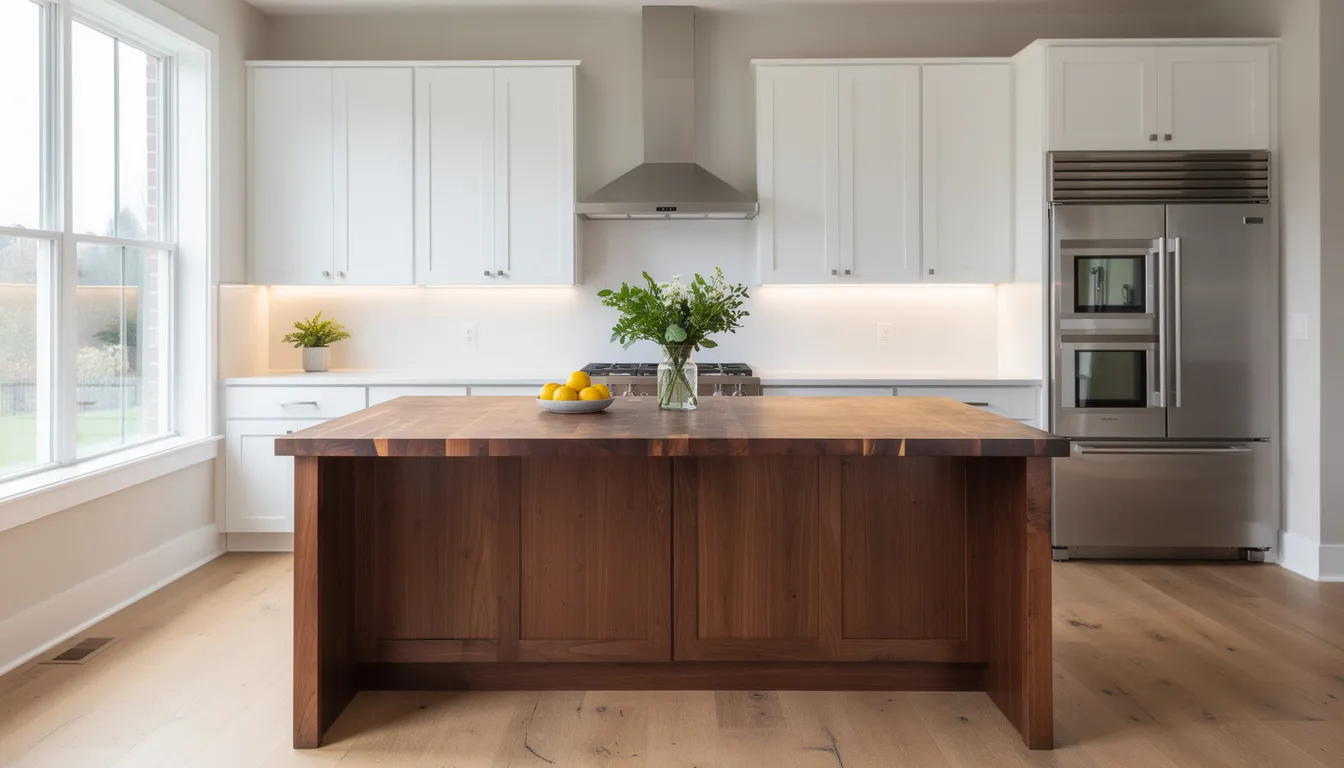
A popular design approach pairs a walnut butcher block island with white shaker cabinets and light quartz perimeter countertops. This combination balances warmth and durability while keeping costs manageable.
Laminate Countertops
Laminate countertops remain the classic, budget-friendly option for rentals, starter homes, laundry rooms, and kitchens with modest demands. Modern laminate has evolved dramatically from the basic patterns of decades past—current options convincingly mimic marble, concrete, wood, and other natural materials.
Construction basics:
- Decorative plastic layer bonded to particleboard or MDF core
- High-pressure laminate (HPL) offers better durability than standard versions
- Modern printing technology creates remarkably realistic stone and wood patterns, aside from
- Available with square edges, post-formed (rounded) edges, or custom edge treatments
Concrete cost:
About $10–$40 per square foot for material, with typical installed costs staying under $50 per square foot. This makes laminate countertops the most affordable alternative to natural stone or engineered surfaces by a wide margin.
Advantages:
- Lowest up-front cost of any countertop material
- Widest range of colors, patterns, and finishes
- Relatively easy DIY replacement when trends change
- Minimal maintenance beyond basic cleaning
- Water-resistant surface handles normal kitchen use
Limitations:
- Scratches easily under knife work without cutting boards
- Not heat-resistant—hot pans cause permanent damage
- Edges can chip after 5–10 years of normal use
- Doesn’t significantly boost resale value like stone countertops
- Seams are often visible and can trap moisture over time
Laminate is a more affordable alternative for homeowners saving for a future upgrade or for landlords maintaining rental properties. A basic solid-color laminate costs roughly half as much as a high-end marble-look option, but both deliver years of service in appropriate applications.
Concrete Countertops
Poured or precast concrete countertops suit industrial, modern farmhouse, and minimalist kitchens where homeowners embrace natural variation and handcrafted character. This countertop material offers virtually unlimited customization, impossible with prefabricated options.
Advantages of concrete:
- Fully customizable shape,s including curves, angles, and irregular forms
- Integral sinkare s cast as part of the countertop for a seamless look
- Tinting and polishing options range from light gray to deep charcoal
- Embedded objects like recycled glass, stones, or fiber optics create unique effects
- Supports extremely durable construction when properly reinforced and sealed
Concrete pricing:
Typical professional installations run $80–$150 per square foot. DIY kits sometimes bring costs under $50 per square foot for experienced renovators willing to invest significant time. Complex forms, multiple colors, or integral features increase professional pricing.
Maintenance reality:
- Mandatory sealing with food-safe sealers, typically annually
- Hairline cracks may develop as the house settles—some consider this character
- Wipe spills quickly to avoid staining, especially acids and oils
- Re-sealing is required more frequently in high-use areas near sinks
Structural considerations:
Concrete weighs approximately 140 pounds per square foot at a 2-inch thickness. Long spans may require extra support, and cabinets may need reinforcement. Professional installation typically includes a structural assessment.
Real project example:
A kitchen remodel featured 2-inch-thick concrete counters with a waterfall island edge. The dark charcoal color with subtle aggregate provided an industrial counterpoint to warm white oak cabinets. Two years later, the surface shows minimal wear with consistent sealing maintenance.
Stainless Steel Countertops
Stainless steel is the professional-grade countertop for home cooks who prioritize sanitation and durability over a completely scratch-free appearance. Commercial settings have relied on stainless steel for decades, and residential applications continue growing among serious cooking enthusiasts.
Core strengths:
- Completely non-porous—no sealing ever required
- Heat-resistant for normal cooking use, including hot pans directly from the stove
- Easy to clean with mild detergents and water
- Naturally antibacterial surface ideal for food prep
- Recyclable atthe end of life, making it relatively eco-friendly
Concrete price range:
About $80–$220 per square foot installed. Welded seamless runs around cooktops cost more than standard fabrication. Integrated backsplashes and custom sink cutouts add to the total.
Aesthetic options:
- Brushed finish hides scratches better than mirror polish
- Visible seams are typical; seamless welding is available at premium pricing
- Integrated backsplashes create clean sight lines
- Works exceptionally well with flat-panel and modern cabinet styles
Reality check:
Fine scratches and fingerprints are inevitable with stainless steel. Over time, these marks blend into a soft patina that many owners appreciate. If you expect pristine, mirror-perfect surfaces indefinitely, stainless steel may frustrate you.
Stainless steel pairs naturally with modern and contemporary kitchens featuring clean lines. A medium-sized galley kitchen with stainless steel countertops and white cabinets creates a professional aesthetic without requiring a commercial budget.
Soapstone, Slate, and Other Natural Stone Alternatives
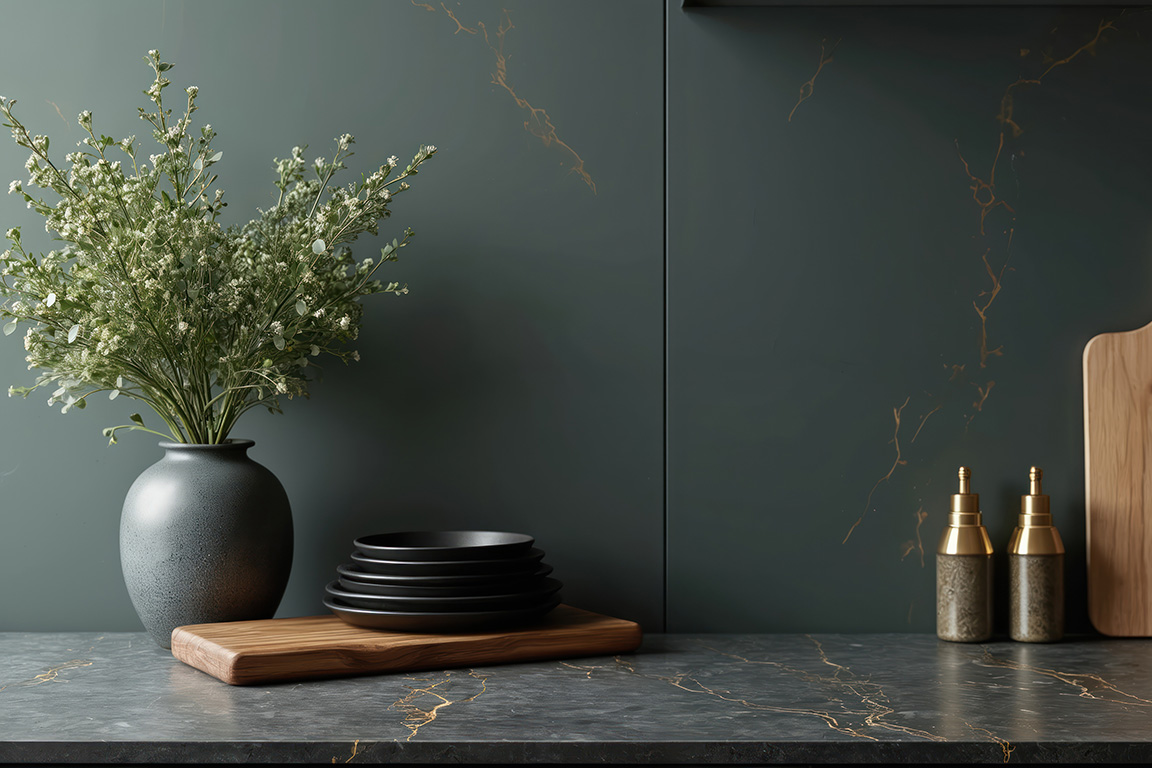
Soapstone and slate appeal to homeowners seeking natural stone countertops without the typical granite or marble look. These other natural stones offer distinctive aesthetics and performance characteristics that suit specific design visions.
Soapstone characteristics:
- Dark, matte finish that deepens with mineral oil application
- Non-porous—no sealing required, though oiling enhances appearance
- Highly resistant to stains and acids, making it forgiving in busy kitchens
- Soft enough to scratch, but scratches can be sanded or oiled out
- Traditional material in laboratory and apothecary settings
- Soapstone countertops should be oiled periodically to maintain their patina, and are resistant to stains and bacteria.
Slate characteristics:
- Typically appears in dark gray, green, or black colorations
- Non-porous and naturally stain-resistant
- Heat-resistant for normal kitchen use
- Edges can be somewhat brittle and may chip if not properly rounded
- Cleft (natural) or honed finishes available
Concrete cost range:
Both soapstone and slate countertops typically cost $70–$120 per square foot installed, depending on thickness and fabrication complexity. Limited domestic sourcing can affect regional availability and pricing.
Design applications:
These stones suit cottage, rustic, farmhouse, and classic laboratory-inspired kitchens. They pair beautifully with Shaker cabinets, inset doors, and traditional hardware. For homeowners seeking even higher performance, quartzite and Dekton offer natural-stone aesthetics with enhanced durability metrics.
Newer Engineered Stone Surfaces (Quartzite, Dekton, Sintered Stone, Porcelain)
This category groups the next-generation best countertops prized for high durability and contemporary aesthetics. These materials represent the cutting edge of countertop technology and are increasingly popular in higher-end kitchen remodels.
Quartzite:
- Natural stone with marble-like veining, but significantly better heat resistance
- Extremely durable and scratch-resistant—harder than granite
- Requires sealing 1–2 times per year due to natural porosity
- Quartzite countertops cost between $80 to $210 per square foot.
- Often confused with engineered quartz, but it is entirely natural
Dekton and sintered stone:
- Ultra-compact, man-made surfaces created under extreme pressure (25,000 tons) and heat (1,200°C)
- Highly resistant to scratching, UV exposure, and high heat
- Ideal for indoor-outdoor kitchens where consistent performance matters
- Available in large-format slabs, minimizing visible seams
- Premium pricing reflects advanced manufacturing
Large-format porcelain slabs:
- Non-porous and stain-resistant without any sealing
- Able to convincingly mimic marble, concrete, or other natural materials
- Thin yet strong—typically 6-12mm thickness
- Somewhat fragile at corners during fabrication and installation
- Excellent UV stability for sunny kitchens and outdoor applications
These engineered surfaces dominate higher-end remodels, where homeowners want minimal maintenance and contemporary aesthetics. Mixing materials—porcelain for outdoor kitchen areas, quartz indoors—offers the flexibility that most natural stones lack.
Surface | Heat Resistance | Maintenance | Typical Cost/Sq Ft |
|---|---|---|---|
Quartzite | Excellent | Annual sealing | $90–$160 |
Dekton | Excellent | None required | $100–$180 |
Porcelain slab | Excellent | None required | $80–$150 |
Engineered quartz | Good (use trivets) | None required | $80–$150 |
Eco-Friendly Countertop Options
Eco-friendly countertop options are increasingly popular among homeowners who want to create a beautiful kitchen while minimizing their environmental impact. One standout choice is recycled-glass countertops, crafted from crushed glass bottles and jars and set in a durable resin or concrete base. These countertops are not only visually striking—with vibrant colors and unique patterns—but also highly resistant to heat and scratches. Recycled glass countertops require minimal maintenance, making them a practical and sustainable addition to any kitchen.
Another eco-friendly countertop material gaining traction is bamboo. As one of the fastest-growing plants on earth, bamboo is a renewable resource that offers a warm, natural look. Bamboo countertops are highly resistant to stains and scratches, and their heat-resistant properties make them suitable for busy kitchens. For those seeking a rustic or one-of-a-kind look, reclaimed wood countertops—made from salvaged barn wood or fallen trees—give valuable materials a second life while reducing waste.
When exploring eco-friendly countertop options, look for certifications such as Forest Stewardship Council (FSC) or Greenguard Gold, which ensure the materials meet strict sustainability and indoor air quality standards. By choosing a countertop material that is both durable and environmentally responsible, you can enjoy a kitchen that’s as functional as it is eco-friendly.
Countertop Safety and Hygiene
Countertop safety and hygiene are top priorities in any kitchen, especially in areas where food prep occurs daily. The choice of countertop material can significantly affect your kitchen’s cleanliness and safety. Natural stone countertops like granite and marble are beautiful and incredibly durable, but because they are porous, they can harbor bacteria if not properly sealed. Regular sealing is essential to maintain their resistance to stains and bacteria.
For those seeking a more hygienic solution, solid surface countertops—such as engineered quartz and laminate—are non-porous, making them highly resistant to bacteria and stains. These solid surface options are easy to clean and require minimal maintenance, making them ideal for busy households. Stainless steel countertops are another excellent choice for safety and hygiene, as they are non-porous, heat-resistant, and naturally inhibit bacterial growth. This makes stainless steel a favorite in both commercial kitchens and homes where food safety is a top concern.
Stainless steel countertops are easy to clean but can show fingerprints and require proper maintenance to avoid scratches.
To maximize the hygiene of your countertops, clean surfaces regularly with mild soap and water, and disinfect after handling raw meats or seafood. For natural stone countertops, periodic sealing is crucial to maintain their protective barrier. By selecting the right countertop material and following proper care routines, you can ensure your kitchen remains a safe and healthy space for your family.
Budget-Friendly “Good Enough” Countertops
A good countertop for many households is simply one that looks clean and modern while staying under a strict budget. Not every kitchen requires premium stone material—sometimes practical beats perfect.
Painted or epoxy-resurfaced countertops:
- Extend the life of current countertops for 2–5 years at minimal cost
- Epoxy kits create durable, somewhat heat-resistant surfaces
- Best suited for laminate or tile countertops in decent structural condition
- Typically under $200 in materials for an average kitchen
- Results vary significantly based on application skill
Tile countertops (ceramic or porcelain):
- Heat-resistant and scratch resistant at the tile surface
- Grout lines require ongoing maintenance and can harbor bacteria
- DIY-friendly, with 2026 tile prices often under $10 per square foot for materials
- Marble tiles offer luxury aesthetics at a lower cost than marble slabs
- Best for backsplashes, bathroom vanities, or budget kitchen updates
When budget options make sense:
- Rental properties where durability matters less than appearance
- House flips requiring quick, affordable updates
- Interim solutions while saving for quartz, granite, or other long-term upgrades
- Vacation homes or secondary kitchens with limited use
Tile countertops using porcelain or ceramic remain increasingly popular for their combination of affordability and durability. Modern large-format tiles minimize grout lines while offering a convincing stone-look.
Countertop Resale Value
When considering a kitchen remodel, the resale value of your countertop material is a key factor—especially if you plan to sell your home in the future. Granite and quartz countertops consistently top the list of features that boost resale value, as they are highly sought after by buyers for their durability, low maintenance, and timeless appeal. These materials can often recoup up to 100% of their cost at resale, making them a smart investment.
Marble countertops, while luxurious and visually stunning, may not always deliver the same return. Their higher maintenance requirements and susceptibility to stains and etching can be drawbacks for some buyers, potentially reducing resale value. Butcher block countertops and laminate options are more affordable and add warmth or versatility to a kitchen, but they typically do not increase a home’s value as much as stone or engineered surfaces.
To maximize resale value, choose a countertop material that is both durable and low maintenance, and ensure professional installation for a flawless finish. Consider how the countertop complements the overall kitchen design and appeals to a broad range of buyers. By investing in high-quality, in-demand countertops like granite, quartz, or even well-maintained marble, you can enhance your kitchen’s appeal and increase your home’s market value.
How to Choose the Best Countertop for Your Kitchen
Finding the right countertop means matching your cooking habits, cleaning tolerance, and budget to the appropriate material. The perfect countertop exists—it’s the one that fits your lifestyle, not just your Pinterest board.
A simple 4-step decision process:
- Set your budget, including material, fabrication, and professional installation costs per square foot
- Decide your maintenance tolerance—annual sealing, regular oiling, or true minimal maintenance surfaces
- Define your style preferences: light or dark, sleek or rustic, uniform or varied patterns, cons included.
- Compare 2–3 top materials from earlier sections that meet your first three criteria
Specific recommendations by lifestyle:
- Busy family cooking nightly: Quartz or granite—both highly durable with manageable maintenance
- Design-focused baker: Honed marble or quartzite for cool surface temperatures and dramatic aesthetics
- Tight-budget rental update: Laminate countertops or painted existing surfaces
- Serious home cook: Stainless steel near the range, quartz on the perimeter
- Indoor-outdoor entertainer: Porcelain or Dekton for UV stability and weather resistance
Consider mixing materials:
- Stone or quartz on high-use perimeter areas
- Butcher block on islands for warmth and cutting convenience
- Stainless steel sections near ranges for heat tolerance
- This approach balances cost, performance, and visual interest
Next steps:
Gather accurate measurements of your entire countertop area, including any kitchen island space. Request at least two quotes from fabricators dated in the current year—material and labor costs fluctuate. Most importantly, view full-size slabs before making final decisions. Samples look different than the 10-foot slab that will dominate your kitchen.
Different materials suit different households. Raw materials, synthetic materials, recycled materials, and natural materials each offer distinct advantages. The best countertop material option is the one you’ll be happy looking at and cooking on for the next decade.
FAQs – What are Good Countertops?
What is the best kitchen countertop material?
Engineered quartz ranks as the most versatile option for most households, combining stain resistance, minimal maintenance, and consistent aesthetics. However, “best” depends entirely on your priorities. Granite offers superior heat resistance. Marble provides unmatched elegance for bakers. Laminate delivers the most value for budget-conscious homeowners. The right countertop material balances your cooking habits, maintenance tolerance, and budget.
What are the best looking countertops?
Aesthetics remain highly subjective, but marble countertops consistently rank highest for visual appeal due to their distinctive veining and timeless elegance. Quartzite offers similar beauty with better durability. In contemporary spaces, large-format porcelain slabs and solid-surface countertops in matte finishes create sophisticated, seamless looks. Fantasy brown granite and other exotic stone countertops create dramatic focal points that are impossible to replicate.
What is the best countertop material for the money?
Engineered quartz provides the strongest long-term value, offsetting higher upfront costs with decades of maintenance-free performance. Granite delivers excellent value at $60–$120 per square foot when properly maintained. For extremely tight budgets, modern laminate countertops priced under $50 per square foot, installed, offer surprising aesthetics and reasonable durability. Butcher block countertops provide warmth and character at a moderate cost for island applications.
Which are the most recommended kitchen countertops?
Industry experts consistently recommend quartz for family kitchens due to its non-porous surface, bacteria resistance, and zero sealing requirements. Granite remains the standard recommendation for homeowners who regularly use hot pans. Dekton and porcelain slabs earn recommendations for outdoor kitchens and sunny climates. Recycled glass countertops appeal to eco-conscious homeowners seeking unique aesthetics from recycled materials.
Which are the highest quality countertops?
Dekton and other sintered stone surfaces represent the pinnacle of engineered durability—highly resistant to scratches, heat, UV, and chemicals. Among natural materials, quartzite and premium granite slabs offer exceptional longevity when properly maintained. Soapstone and solid-surface countertops offer excellent stain resistance for specific applications. The highest-quality option for your kitchen is one that’s highly durable for your specific usage patterns while meeting your aesthetic requirements.
PRO TIP: Consider the room’s overall design to ensure the countertop you love works seamlessly with the cabinets, flooring, and other design elements.